How to see the International Space Station
The space station is a bright, steady point of light that crosses the sky in a few minutes. It is visible only when it is in sunlight while your sky is dark: within a few hours after sunset or before sunrise.
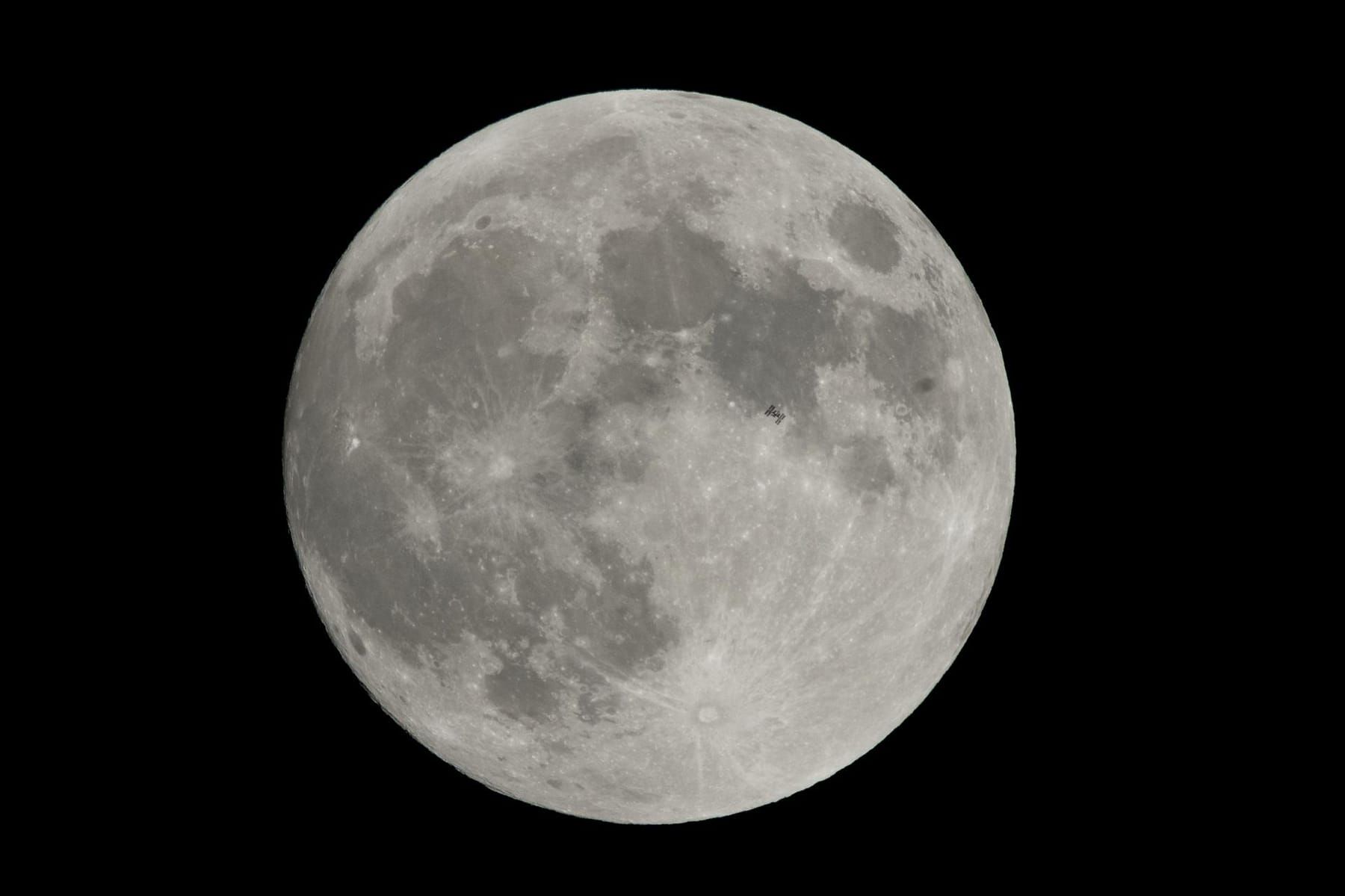
The International Space Station (ISS) is the largest object people have put in orbit, and from the ground it is one of the easiest things to spot in the night sky. It looks like a very bright star that moves steadily across the sky, without blinking, and crosses from one horizon to the other in a few minutes. NASA describes it as similar to an airplane or a very bright star moving across the night sky, except that it does not have flashing lights and does not change course.
Why you can see it
The station has no lights bright enough to be seen from the ground. What you see is sunlight reflected by its huge solar arrays and modules, contrasting against a dark sky. That sets the condition for every sighting: the station must be in sunlight while you are in darkness. This happens within a few hours after sunset and before sunrise, when the Sun has set for you on the ground but still shines on the station 400 km up. In the middle of the night the station crosses Earth’s shadow and is invisible.
Some facts from NASA that explain what you see:
- Altitude: about 400 km (250 miles) above the ground.
- Speed: about 28,000 km/h (17,500 mph), so it circles the Earth in roughly 90 minutes.
- Inclination: its orbit is tilted 51.6° to the equator. From places farther than 51.6° north or south of the equator the station never passes directly overhead, but it is still visible lower in the sky from most inhabited places.
Reading a pass prediction
A pass is described with a few numbers:
- Time: when the station first rises above the horizon, in your local time.
- Duration: how long it stays visible, usually a few minutes. The longest passes go high across the sky.
- Maximum height: the highest point of the pass above the horizon, in degrees. NASA’s rule of thumb: the horizon is 0°, straight overhead is 90°. A pass with a maximum height of 10° stays low and may be hidden by houses and trees. One above 40° is easy, and above 70° the station crosses almost overhead and is at its brightest.
- Appears and disappears: the compass directions where the station enters and leaves your view. Passes always run roughly from west to east, because that is the direction the station orbits.
Where to look
Face the direction given for “appears”, usually some point in the west, a minute before the predicted time. The station comes up from the horizon as a faint point and brightens as it climbs. Follow it across the sky. At the end it either sets in the east or fades out as it enters Earth’s shadow. On morning passes it can do the reverse, appearing suddenly high in the sky as it leaves the shadow.
You need no equipment. Binoculars show a slightly elongated shape at best, and the station moves too fast to follow in a telescope without practice.
Tips
- Check the pass predictions a day ahead and set an alarm. A good pass is over in five minutes.
- A clear sky matters more than a dark one. The station is bright enough to be seen from a city centre, and even in bright twilight on the best passes.
- Watch out for other satellites. Many move in the same way but are fainter. The station is usually the brightest moving object in the sky.
- Planets, meteors and aircraft can be confused with it: planets do not move noticeably in minutes, meteors last a second or two, and aircraft blink.
Predictions
Pass predictions are computed from the station’s current orbital elements, which the US Space Force updates two or three times a day and CelesTrak republishes every two hours (NASA’s own trajectory data are updated about three times a week). They drift by a minute or two over a week, because the station is boosted now and then to counter atmospheric drag, so use a prediction made within the last few days. The space station page lists the visible passes for your location for the next ten nights.
Sources
- NASA: Spot the Station (how the station looks, why it is visible, inclination, maximum height)
- NASA: International Space Station (altitude and speed)
- CelesTrak (orbital elements used for the pass predictions)
Frequently asked questions
How bright is the space station?
On a good pass it outshines every star and can rival Venus, the brightest planet. It is bright enough to be seen from a city. Low passes near the horizon are much fainter.
Why does the station suddenly disappear in the middle of the sky?
It has entered Earth's shadow. The station shines only by reflected sunlight, so when it crosses into the shadow it fades out within half a minute or so, even high above the horizon. Before sunrise the opposite happens: it appears out of nowhere as it leaves the shadow.
Does the station blink?
No. It is a steady white or yellowish light. A moving light that blinks is an aircraft. Satellites can also flash as they tumble, but the station does not.
How often can I see it?
It depends on your latitude and the season. There are stretches of several evenings or mornings in a row with visible passes, followed by weeks without any, because the station's orbit drifts relative to the Sun.