What can I see tonight?
Everything for a night under the stars, for your place and any night: when it gets fully dark, what the Moon is doing, which planets are up and where to look, the sky in 3D and, for the coming nights, cloud cover and the chance of aurora.
Tonight at a glance
Visible planets
 Mars 6:29 AM
 Jupiter 6:29 AM
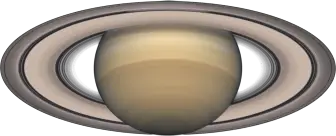 Saturn 12:09 AM
Night sky
The sky over New York at the time on the bar below. Drag to look around, use the compass to face a direction, or press play to watch the sky turn through the night.
Loading 3D view...
Drag to look around, pinch or scroll to zoom.
When it gets dark
9 h 46 min
of full darkness · from 7:50 PM to 5:35 AM
| Sunset | 6:19 PM |
|---|---|
| End of civil twilight | 6:46 PM |
| End of nautical twilight | 7:18 PM |
| Fully dark (end of astronomical twilight) | 7:50 PM |
| Dawn begins (start of astronomical twilight) | 5:35 AM |
| Start of nautical twilight | 6:07 AM |
| Start of civil twilight | 6:39 AM |
| Sunrise | 7:06 AM |
The Moon
A waxing crescent shows low in the west after sunset and sets in the evening, leaving the rest of the night dark. Its unlit part often glows faintly with earthshine, sunlight reflected from Earth.
| Waxing crescent | 12% of the disc lit |
|---|---|
| Moonrise | 11:24 AM (October 14) |
| Moonset | 7:34 PM |
| Highest at | 6:19 PM |
| Direction | SW (223°) |
| Height above horizon | 10° |
| Constellation | Libra |
Planets
| Planet | Visible | Best time | Direction | Height above horizon | Brightness (magnitude) | Constellation |
|---|---|---|---|---|---|---|
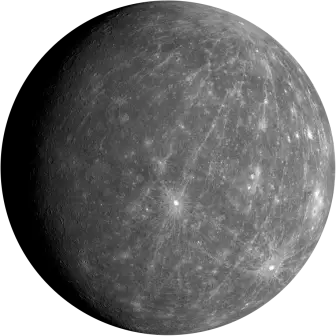 Mercury Mercury | No | – | – | – | -0.1 | Libra |
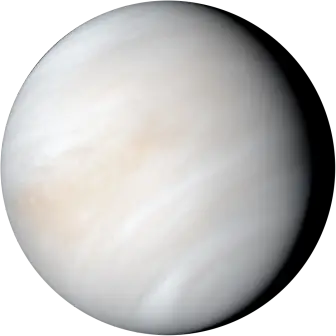 Venus Venus | No | – | – | – | -4.4 | Virgo |
| Mars | Yes | 6:29 AM | SE (126°) | 59° | 1.0 | Cancer |
| Jupiter | Yes | 6:29 AM | ESE (117°) | 48° | -1.9 | Leo |
| Saturn | Yes | 12:09 AM | S (180°) | 51° | 0.3 | Cetus |
 Uranus Uranus | With binoculars or a telescope | 3:39 AM | S (181°) | 70° | 5.6 | Taurus |
 Neptune Neptune | With binoculars or a telescope | 11:39 PM | S (181°) | 49° | 7.8 | Pisces |
Visible means: at least 10° above the horizon while the Sun is at least 6° below it. The summary lists planets brighter than magnitude 5, which are easy to see without optical aid. Fainter ones need binoculars or a telescope.
Aurora
Loading...
The level comes from the highest Kp NOAA forecasts for this night and NOAA’s rule of thumb for the auroral oval: its edge lies at about 66° geomagnetic latitude at Kp 0 and 2° closer to the equator for each Kp step. High: the oval reaches your place, so the aurora can be overhead. Medium: your place is within about 621 mi of the oval, the distance from which NOAA says a bright aurora can be seen. Low: farther away. Kp runs from 0 (quiet) to 9 (an extreme storm). The overhead chance is NOAA’s OVATION forecast for the next 30 to 90 minutes, shown only for the current night. How to read the aurora forecast
How to use this page
Choose your place and a night at the top: tonight by default, or one of the key dates such as a meteor shower peak or a full Moon. Everything on the page then follows that place and night: the summary, the timeline, the 3D sky and the tables. Move the time bar under the 3D sky to see the sky at any moment of the night.
What the numbers mean
- Fully dark
- The end of astronomical twilight, when the Sun is 18° below the horizon and the sky is as dark as it gets.
- Height above horizon
- The angle above the horizon, from 0° (on the horizon) to 90° (straight overhead). A fist at arm’s length covers about 10°.
- Direction
- The compass direction to face, as a point (N, SE, WSW) and as an azimuth in degrees, counted from north through east (90° = east).
- Magnitude
- Brightness: the smaller the number, the brighter. About 6 is the faintest the eye sees under a dark sky, and Venus can reach about −4.8.
- Moon lit
- The share of the Moon’s disc that is lit, from 0% at new Moon to 100% at full Moon.
How accurate it is
Positions and times come from Astronomy Engine. In our tests, Sun and Moon positions agree with NASA JPL’s Horizons to within one arcminute, sunrise, sunset, moonrise and moonset to within two minutes, and Moon phases with the US Naval Observatory to within a minute and a half. Times assume a flat horizon: hills and buildings change when you actually see something rise or set. Cloud cover is a forecast from MET Norway, and the aurora chance is NOAA’s forecast for the next 30 to 90 minutes, so it is shown only for the current night. Methodology
Frequently asked questions
When is the best time to look?
For faint stars and deep-sky objects, after it is fully dark and before dawn begins. Planets show earlier: each is easiest to see around its best time in the table, when it is highest while the sky is dark enough (Mercury and Venus often only in twilight).
Why can’t I see a planet listed as visible?
It may be low on the horizon, behind buildings, trees or clouds, or still in twilight. Check its direction and height, and the cloud row in the timeline.
Does the Moon matter?
A bright Moon lights up the sky and hides faint stars, meteors and the Milky Way. Planets and bright stars stay easy to see.
Do I need a telescope?
No. The planets in the summary (marked Yes in the table) are bright enough for the eye alone. Uranus, Neptune and fainter objects need binoculars or a telescope.
Guides for tonight
- How to find planets in the night skyFive planets are easy to see with the naked eye. Here is where to look, when, and how to recognise them.
- Twilight and dark sky: civil, nautical and astronomicalThe sky is fully dark only when the Sun is more than 18° below the horizon. Here is what happens before that.
- Magnitude: how star brightness is measuredLower numbers mean brighter, and five magnitudes are a factor of 100 in brightness.
- Altitude and azimuth: finding things in the skyTwo angles tell you exactly where to look: which direction, and how high.
- Moon phases explainedThe Moon is always half lit by the Sun. What changes is how much of that lit half we see from Earth.
- Light pollution and dark skies: the Bortle scaleFrom a city centre you can count a few dozen stars. From a truly dark site you can count a few thousand, with the Milky Way bright enough to cast a shadow. The Bortle scale puts a number on the difference.
- Aurora and the Kp index: when can you see the northern lights?The higher the Kp index, the farther from the poles the aurora reaches. Dark, clear skies and a view to the north do the rest.
Times are for the place and date above. Change the place or the date to plan another night.
Calculated with Astronomy Engine, an open-source library verified against the US Naval Observatory and NASA JPL. Data sources