Your weight on other worlds
Enter your weight to see what a scale would show on the Moon, the other planets, Pluto, the largest moons and the Sun.
- Tethys0.15 m/s² · 0.01× Earth 1.0 kg
- Iapetus0.22 m/s² · 0.02× Earth 1.6 kg
- Dione0.23 m/s² · 0.02× Earth 1.7 kg
- Umbriel0.25 m/s² · 0.03× Earth 1.8 kg
- Ariel0.25 m/s² · 0.03× Earth 1.8 kg
- Rhea0.26 m/s² · 0.03× Earth 1.9 kg
- Charon0.29 m/s² · 0.03× Earth 2.1 kg
- Oberon0.35 m/s² · 0.04× Earth 2.5 kg
- Titania0.36 m/s² · 0.04× Earth 2.6 kg
- Pluto0.62 m/s² · 0.06× Earth 4.4 kg
- Triton0.78 m/s² · 0.08× Earth 5.6 kg
- Callisto1.24 m/s² · 0.13× Earth 8.8 kg
- Europa1.31 m/s² · 0.13× Earth 9.4 kg
- Titan1.35 m/s² · 0.14× Earth 9.7 kg
- Ganymede1.43 m/s² · 0.15× Earth 10.2 kg
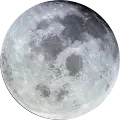 Moon1.62 m/s² · 0.16× Earth 11.5 kg
 - Io1.80 m/s² · 0.18× Earth 12.8 kg
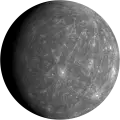 Mercury3.70 m/s² · 0.38× Earth 26.4 kg
 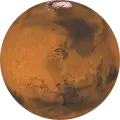 Mars3.73 m/s² · 0.38× Earth 26.6 kg
 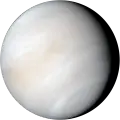 Venus8.87 m/s² · 0.90× Earth 63.2 kg
 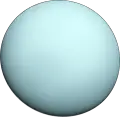 Uranus9.01 m/s² · 0.92× Earth 64.2 kg
 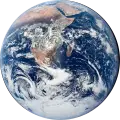 Earth9.82 m/s² · 1.00× Earth 70.0 kg
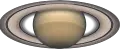 Saturn11.2 m/s² · 1.14× Earth 79.8 kg
 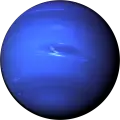 Neptune11.3 m/s² · 1.15× Earth 80.3 kg
 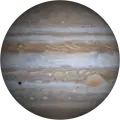 Jupiter25.9 m/s² · 2.64× Earth 185 kg
 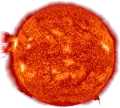 Sun274.0 m/s² · 27.9× Earth 1,953 kg
Your mass stays the same everywhere. What changes is how strongly each world pulls on it. The weight shown is what a bathroom scale calibrated on Earth would read. Gravity is NASA’s mean surface gravity, averaged over the globe without the effect of the world’s spin. For the giant planets it is taken where the pressure is 1 bar, for the Sun at its visible surface.
See it in 3D: drop, jump and throw on other worlds
Gravity: mean values from NASA planetary fact sheets. Moons calculated from NASA/JPL satellite parameters (g = GM/r²). NASA · NASA/JPL · Data sources