Comets
The comets predicted to be brightest over the next twelve months, from the orbits and brightness parameters NASA/JPL publishes daily. Magnitude 6 is the naked-eye limit under a dark sky, about 10 the limit for binoculars. Most comets need a telescope.
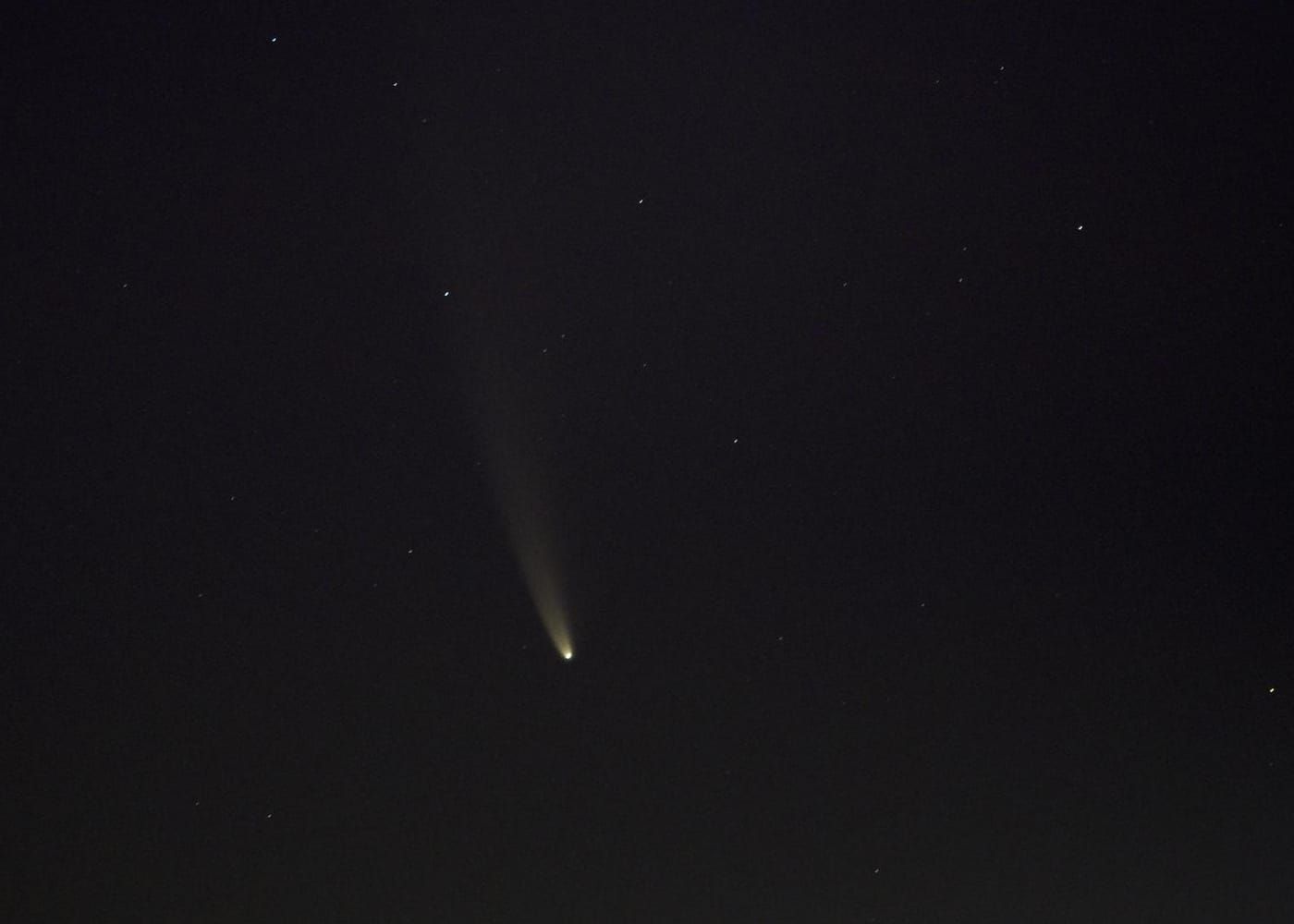
Nothing matches.
| Object | Brightest | When | Now | Constellation | Perihelion |
|---|---|---|---|---|---|
| C/2026 O1 (PANSTARRS) | mag 9.8 | Jun 20, 2027 | mag 17.9 | Piscis Austrinus | Jul 18, 2027 |
| C/2025 Y1 (ATLAS) | mag 12.1 | Jul 20, 2027 | mag 16.2 | Virgo | Oct 14, 2027 |
| C/2025 M2 (PANSTARRS) | mag 12.5 | Jun 30, 2027 | mag 16.4 | Sagittarius | Nov 23, 2027 |
| 2P/Encke | mag 12.7 | Feb 5, 2027 | mag 17.2 | Pisces | Oct 22, 2023 |
| C/2026 P2 (PANSTARRS) | mag 13.0 | Oct 13, 2027 | mag 17.9 | Cetus | Nov 21, 2027 |
| C/2024 T5 (ATLAS) | mag 13.1 | Jan 1, 2027 | mag 13.7 | Lepus | May 6, 2027 |
| C/2025 V2 (Rankin) | mag 13.2 | May 11, 2027 | mag 16.1 | Coma Berenices | Mar 22, 2027 |
| C/2026 A2 (Bok) | mag 13.7 | Nov 27, 2026 | mag 14.4 | Draco | Dec 22, 2026 |
The table lists every comet predicted to reach magnitude 14 or brighter in the next twelve months: within reach of a backyard telescope. None of them is expected to become visible to the naked eye (about magnitude 6) in that time.
Orbital elements and brightness parameters: NASA/JPL Small-Body Database, refreshed daily. Positions are two-body propagation from those elements with Astronomy Engine (accurate for weeks to months around the epoch). Magnitudes use JPL’s standard comet and asteroid formulas. NASA/JPL Small-Body Database Query API (Oct 13, 2026). Calculated with Astronomy Engine, an open-source library verified against the US Naval Observatory and NASA JPL. Data sources
Famous comets
Well-known comets of the past, and some that return. This is a reference list, not tonight’s sky: unless the status below says otherwise, these comets cannot be seen now. Where each one is today and when it comes back are worked out from NASA/JPL orbits.
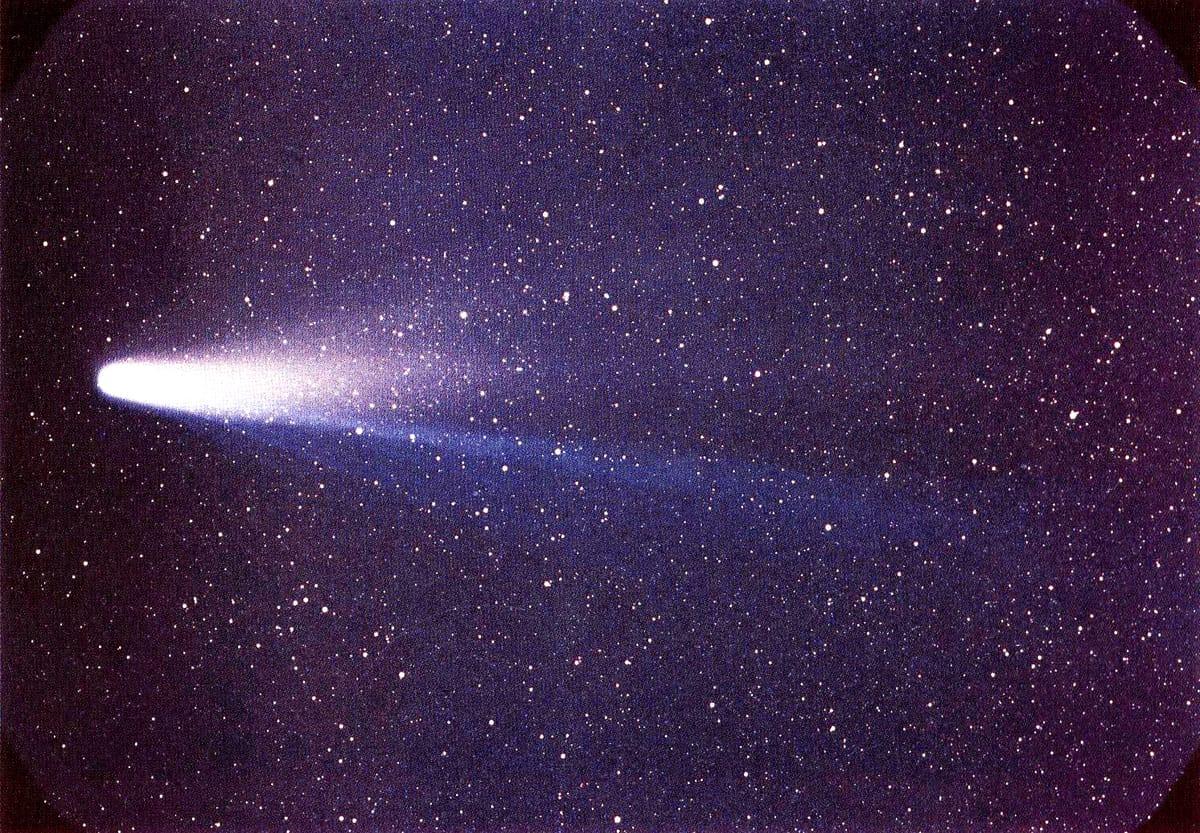
1P/Halley, March 8, 1986. Photo: NASA/W. Liller 1P/Halley
The best-known periodic comet, recorded at every return for over 2,000 years. ESA’s Giotto flew past its nucleus in 1986.
Not visible now: 35 au from the Sun
- Last closest to the Sun
- February 1986
- Next return
- around 2060
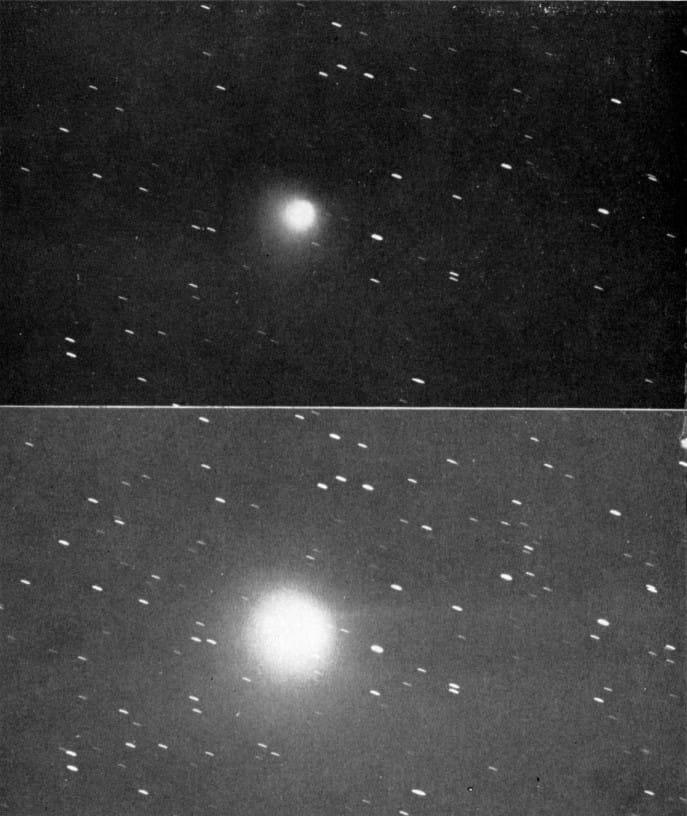
2P/Encke, January 6, 1961. Photo: Elizabeth Roemer, U.S. Naval Observatory 2P/Encke
The shortest period of any well-known comet, about 3.3 years and the source of the Taurid meteors.
Not visible now: 2.0 au from the Sun
- Last closest to the Sun
- October 2023
- Next return
- February 2027
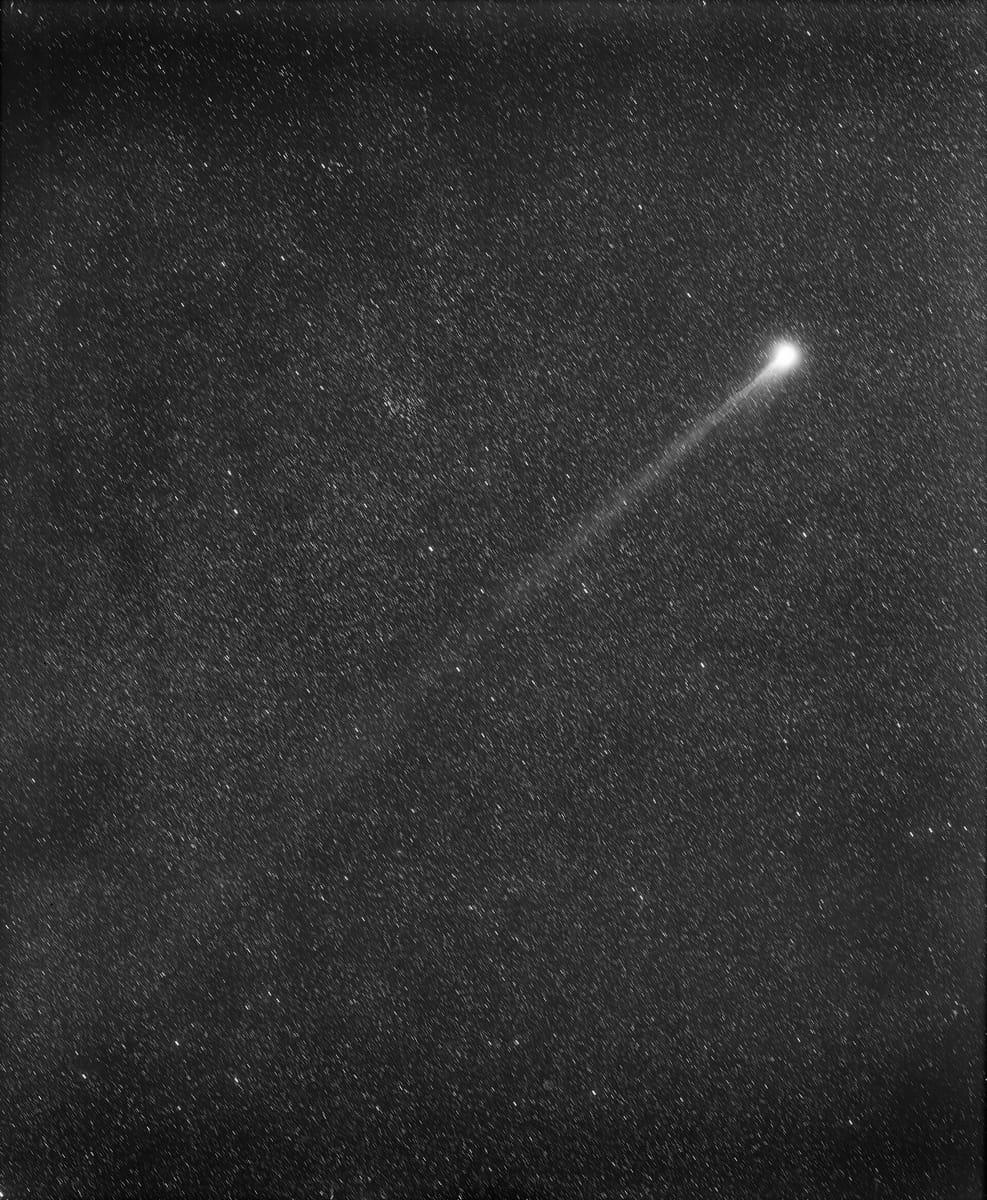
109P/Swift-Tuttle, November 25, 1992. Photo: Landessternwarte Heidelberg-Königstuhl 109P/Swift-Tuttle
Source of the Perseid meteors every August.
Not visible now: 43 au from the Sun
- Last closest to the Sun
- December 1992
- Next return
- around 2125
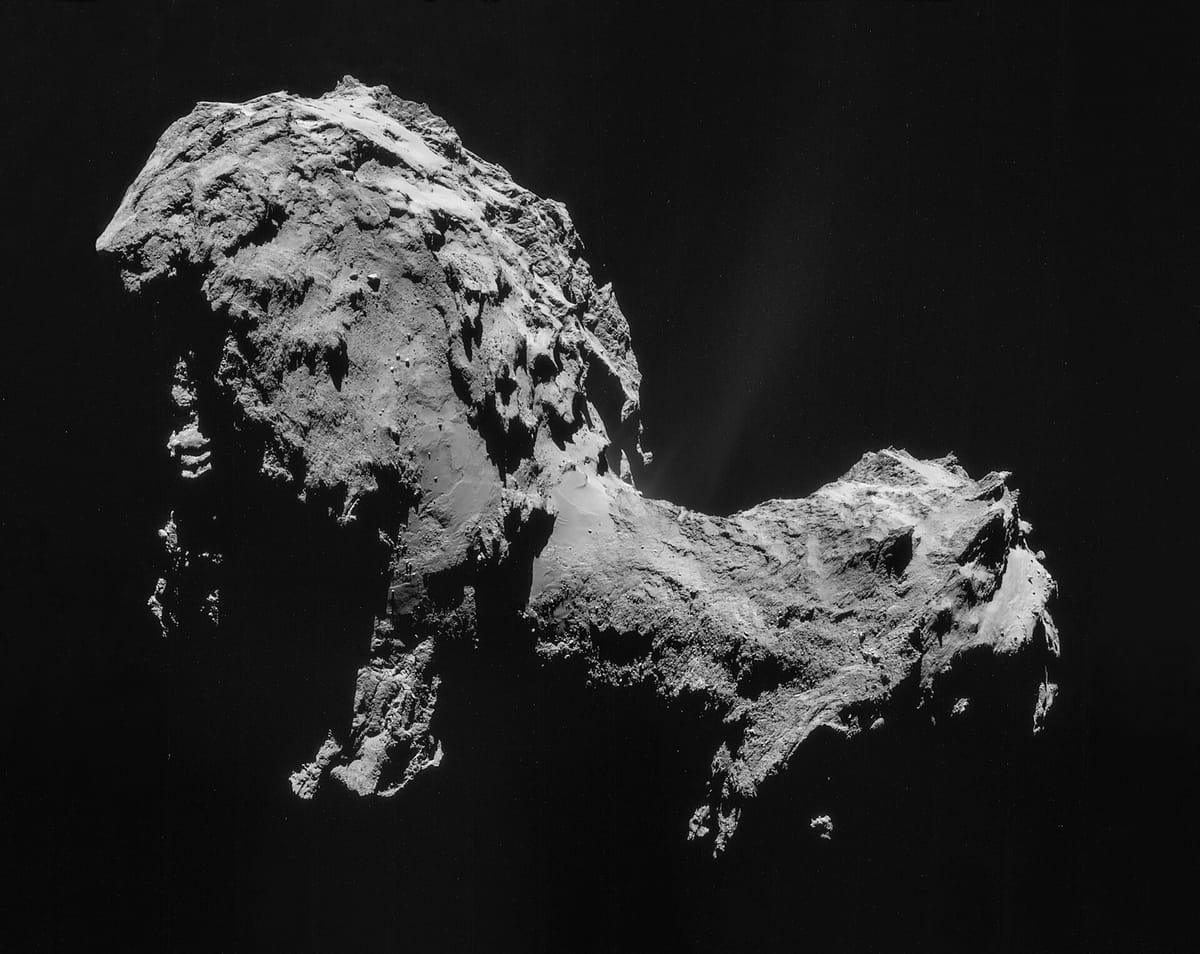
67P/Churyumov-Gerasimenko, September 19, 2014. Photo: ESA/Rosetta/NAVCAM, CC BY-SA IGO 3.0 67P/Churyumov-Gerasimenko
Orbited by ESA’s Rosetta from 2014 to 2016. Its lander Philae was the first to touch down on a comet.
Not visible now: 4.8 au from the Sun
- Last closest to the Sun
- January 2022
- Next return
- July 2028
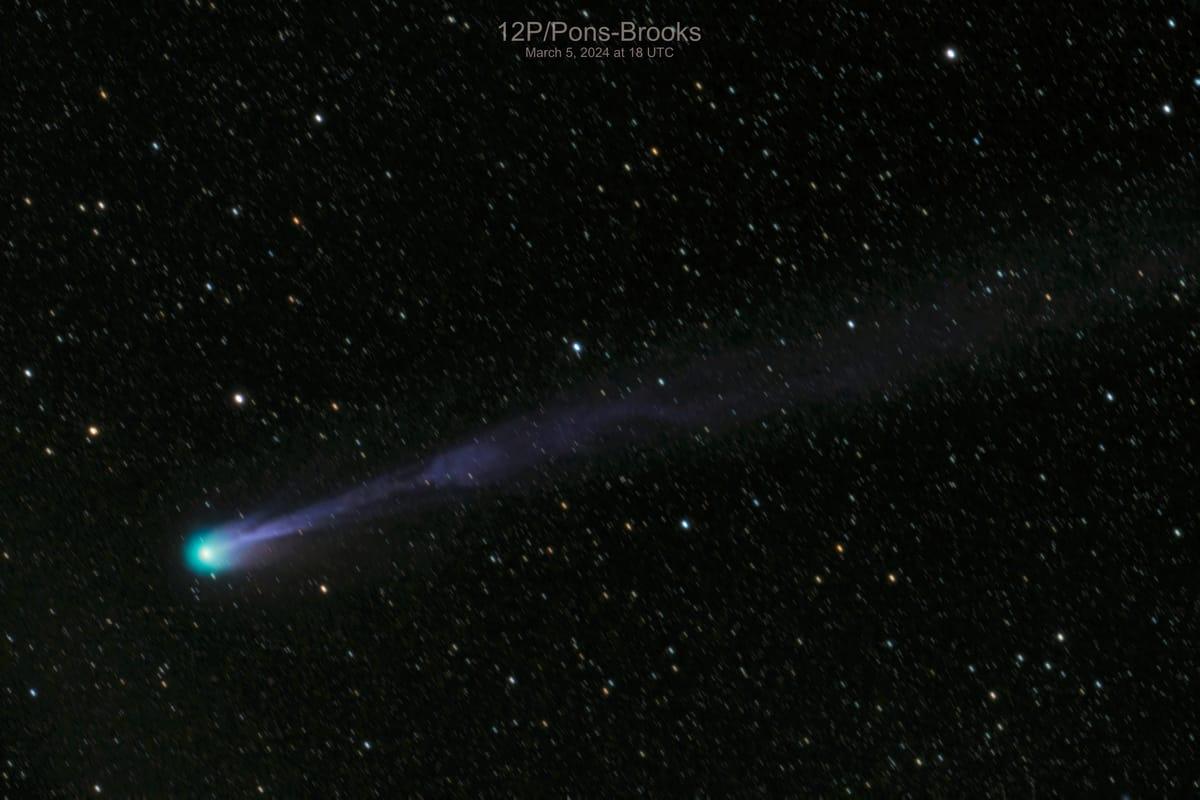
12P/Pons-Brooks, March 5, 2024. Photo: Giuseppe Donatiello 12P/Pons-Brooks
Known for its outbursts, it was bright in spring 2024.
Not visible now: 8.9 au from the Sun
- Last closest to the Sun
- April 2024
- Next return
- around 2095
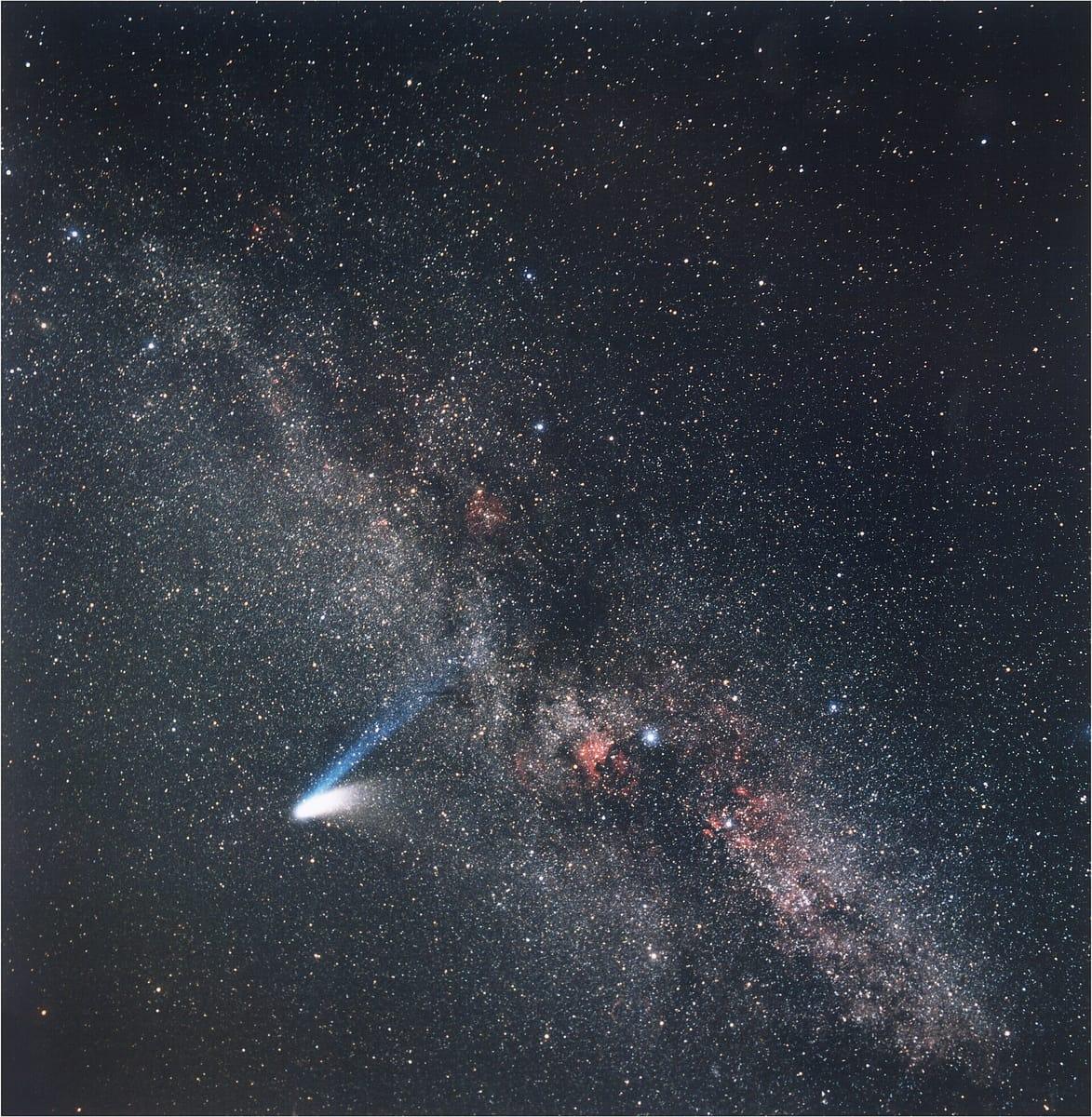
C/1995 O1 (Hale-Bopp), March 10, 1997. Photo: ESO/E. Slawik C/1995 O1 (Hale-Bopp)
One of the brightest comets of the 20th century, visible to the naked eye for about a year and a half in 1996 and 1997.
Not visible now: 51 au from the Sun
- Last closest to the Sun
- March 1997
- Next return
- in about 2,300 years
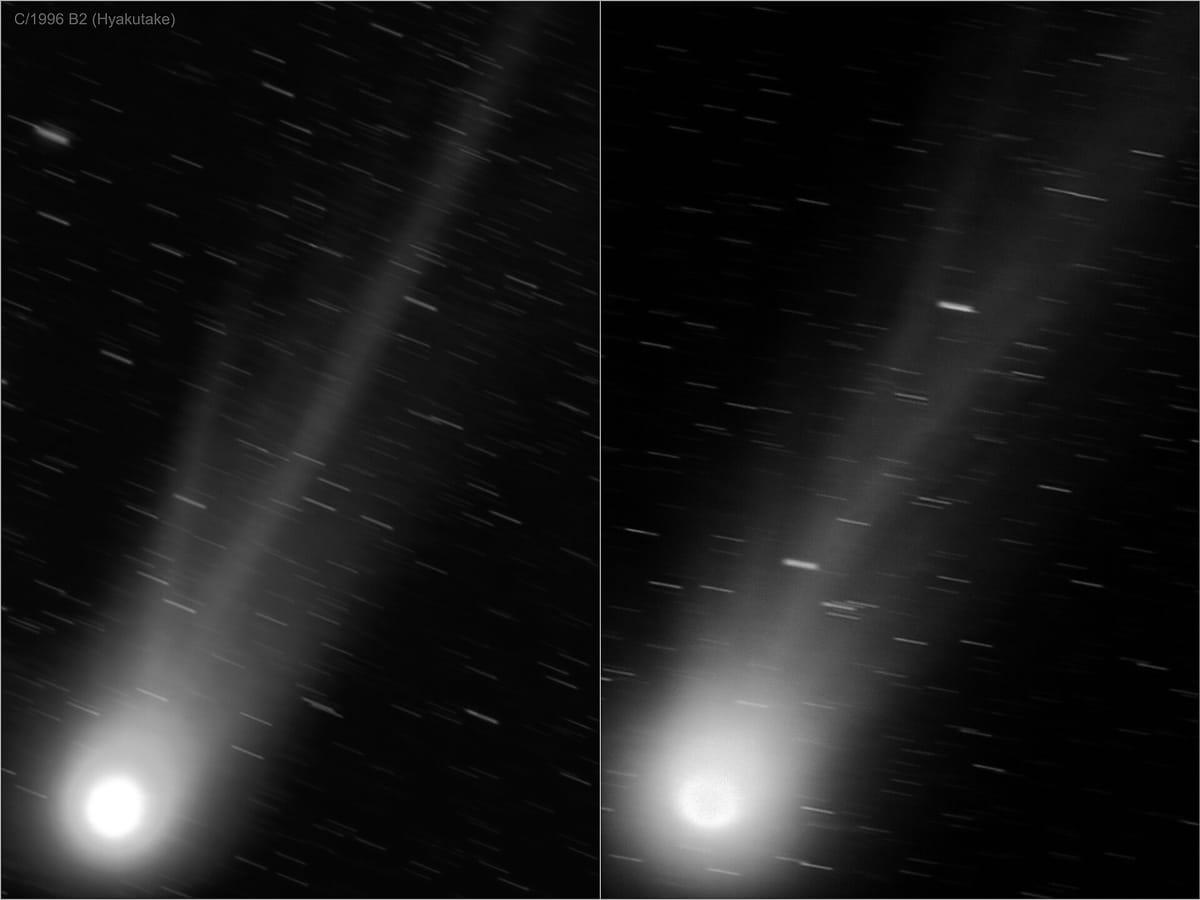
C/1996 B2 (Hyakutake), March 23, 1996. Photo: Giuseppe Donatiello C/1996 B2 (Hyakutake)
Passed close to Earth in March 1996 with a very long tail.
Not visible now: 54 au from the Sun
- Last closest to the Sun
- May 1996
- Next return
- in about 98,000 years
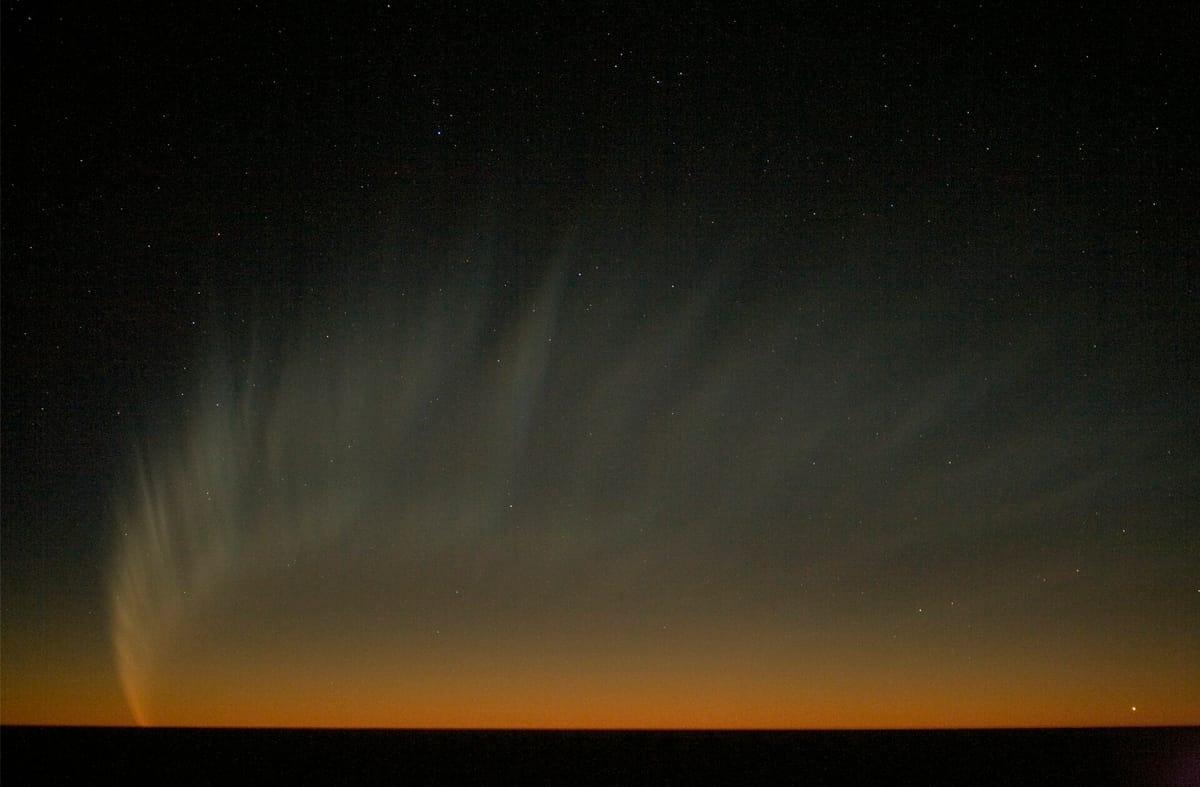
C/2006 P1 (McNaught), January 18, 2007. Photo: ESO C/2006 P1 (McNaught)
The Great Comet of 2007, the brightest in decades, with a wide fan-shaped tail seen from the Southern Hemisphere.
Not visible now: 41 au from the Sun
- Last closest to the Sun
- January 2007
- Next return
- Not coming back (open orbit)
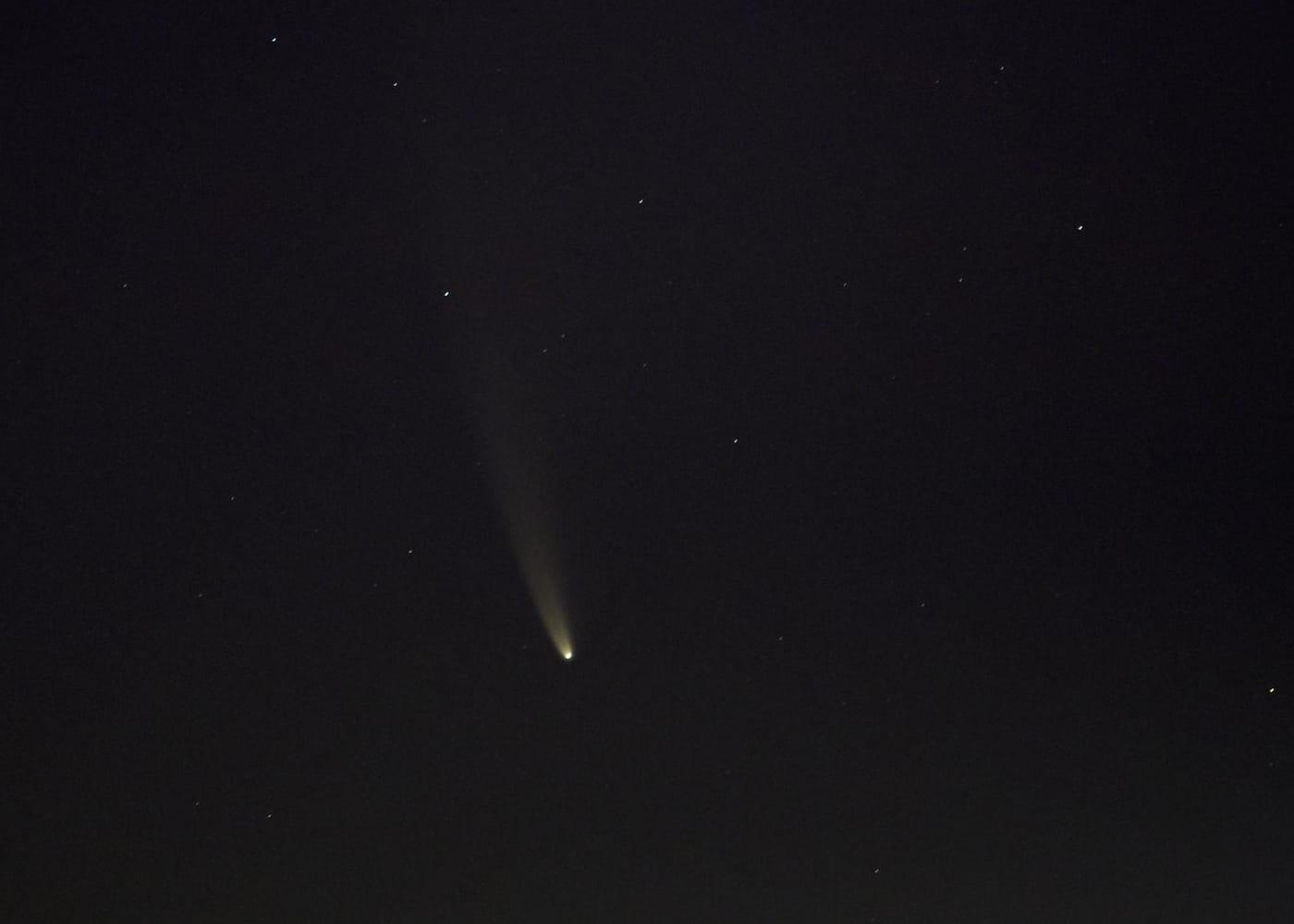
C/2020 F3 (NEOWISE), July 12, 2020. Photo: NASA/Bill Ingalls C/2020 F3 (NEOWISE)
The brightest comet in northern skies since Hale-Bopp, in July 2020.
Not visible now: 19 au from the Sun
- Last closest to the Sun
- July 2020
- Next return
- in about 6,800 years
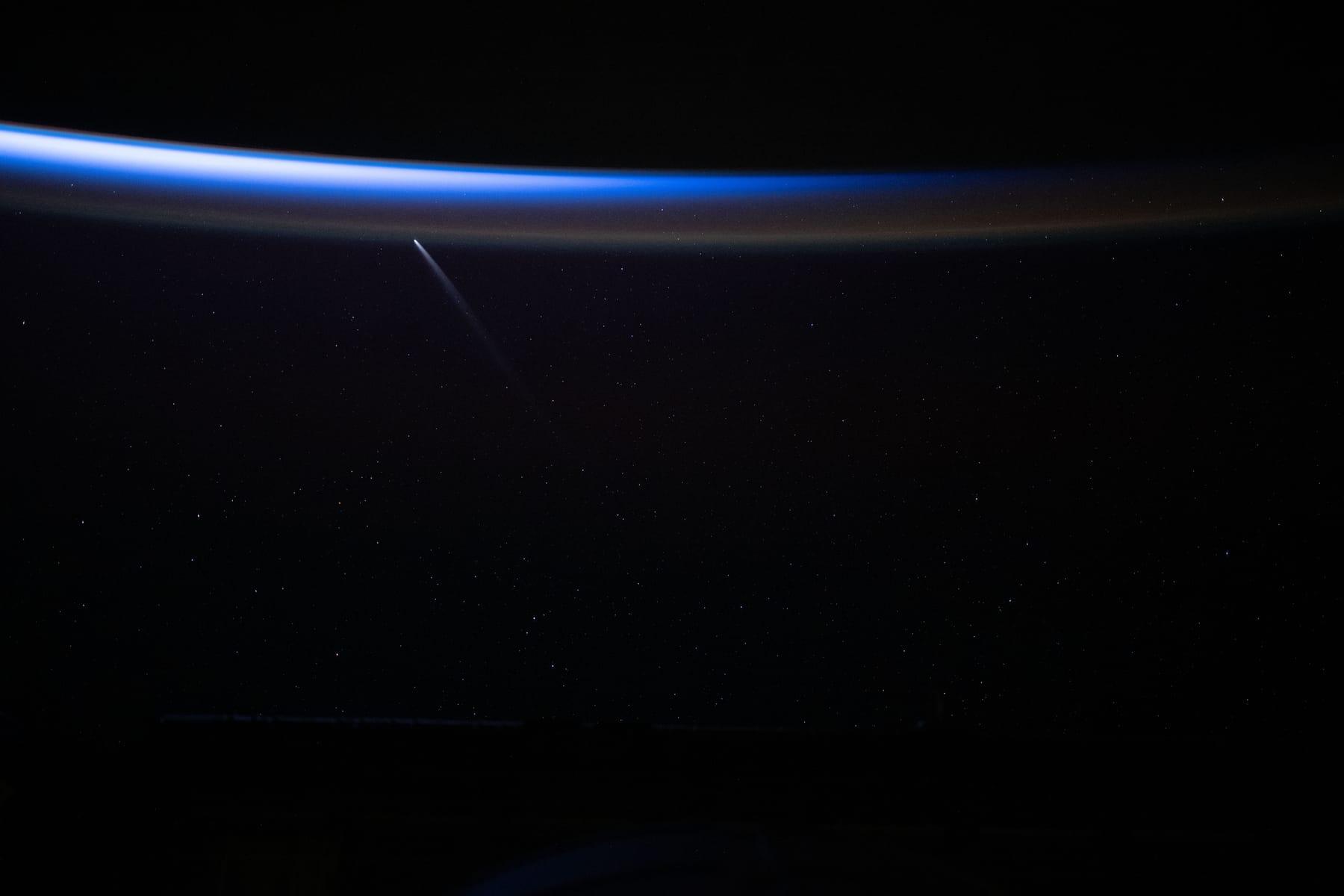
C/2023 A3 (Tsuchinshan-ATLAS), September 28, 2024. Photo: NASA C/2023 A3 (Tsuchinshan-ATLAS)
A bright comet in October 2024, seen in the evening sky after its closest approach to the Sun.
Not visible now: 8.7 au from the Sun
- Last closest to the Sun
- September 2024
- Next return
- Not coming back (open orbit)
55P/Tempel-Tuttle
Source of the Leonid meteors, with meteor storms in some years.
Not visible now: 12 au from the Sun
- Last closest to the Sun
- February 1998
- Next return
- 2031


Return dates far ahead are approximate: the planets’ pull shifts a comet’s orbit a little at every pass. Orbits of famous comets: NASA/JPL Small-Body Database (Oct 11, 2026).
Related guides
- How to observe a cometA comet rarely looks like the photos. In binoculars most comets are a soft, fuzzy patch with a hint of a tail. Only a bright one every few years shows a tail to the naked eye.
- Binoculars for stargazing: what to buy and what to look atA pair of 7x50 or 10x50 binoculars shows the craters of the Moon, the moons of Jupiter, dozens of star clusters and the Andromeda Galaxy, for a fraction of the cost of a telescope.