Aurora forecast
Live space weather from NOAA’s Space Weather Prediction Center: the chance of aurora overhead at your location from the OVATION model, the current planetary Kp index and the forecast for the next three days.
Loading...
How to use this
The Kp index measures the disturbance of Earth’s magnetic field. The higher it is, the farther from the poles the aurora can be seen. The OVATION chance is for aurora directly overhead. A display can often be seen low on the horizon from hundreds of kilometres farther from the pole.
You also need a dark, clear sky and a view towards the pole. Forecasts are predictions: check again in the evening, and look within an hour or two of midnight.
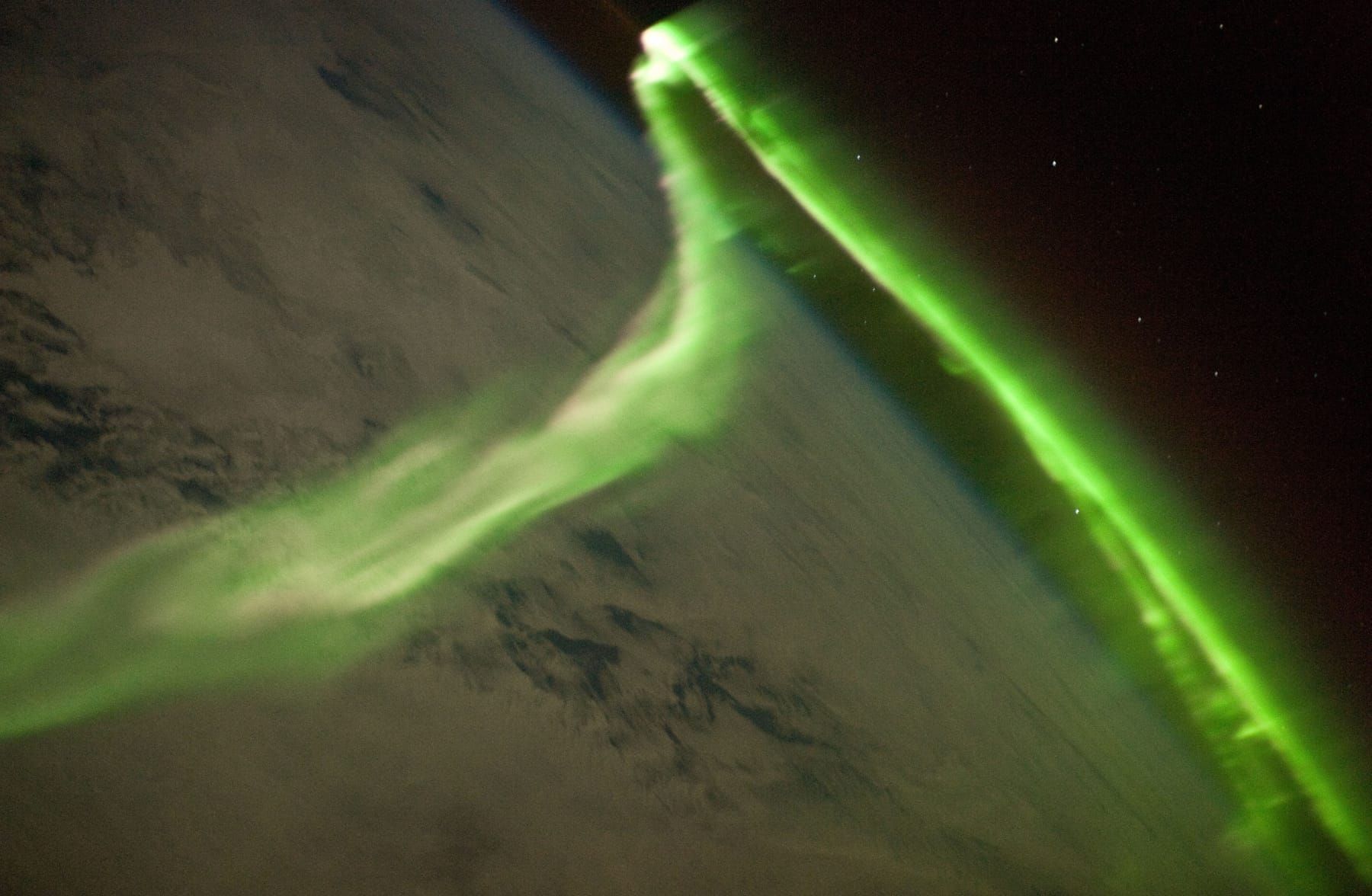
Kp forecast and OVATION aurora forecast: NOAA SWPC. Calculated with Astronomy Engine, an open-source library verified against the US Naval Observatory and NASA JPL. Data sources
Frequently asked questions
What Kp do I need to see the aurora?
It depends on your geomagnetic latitude. Near the Arctic Circle a Kp of 2 or 3 can be enough. In central Europe or the northern United States you usually need a strong storm, Kp 7 or more.
How reliable is the forecast?
The aurora chance is a forecast for the next 30 to 90 minutes, from solar wind measured before it reaches Earth. The three-day Kp forecast is less certain and changes as new data arrive.
When during the night is the aurora strongest?
Often around local midnight, but displays can start any time it is dark. Check the forecast again in the evening and look towards the pole.
Related guides
- Aurora and the Kp index: when can you see the northern lights?The higher the Kp index, the farther from the poles the aurora reaches. Dark, clear skies and a view to the north do the rest.
- Light pollution and dark skies: the Bortle scaleFrom a city centre you can count a few dozen stars. From a truly dark site you can count a few thousand, with the Milky Way bright enough to cast a shadow. The Bortle scale puts a number on the difference.