Aurora and the Kp index: when can you see the northern lights?
The higher the Kp index, the farther from the poles the aurora reaches. Dark, clear skies and a view to the north do the rest.
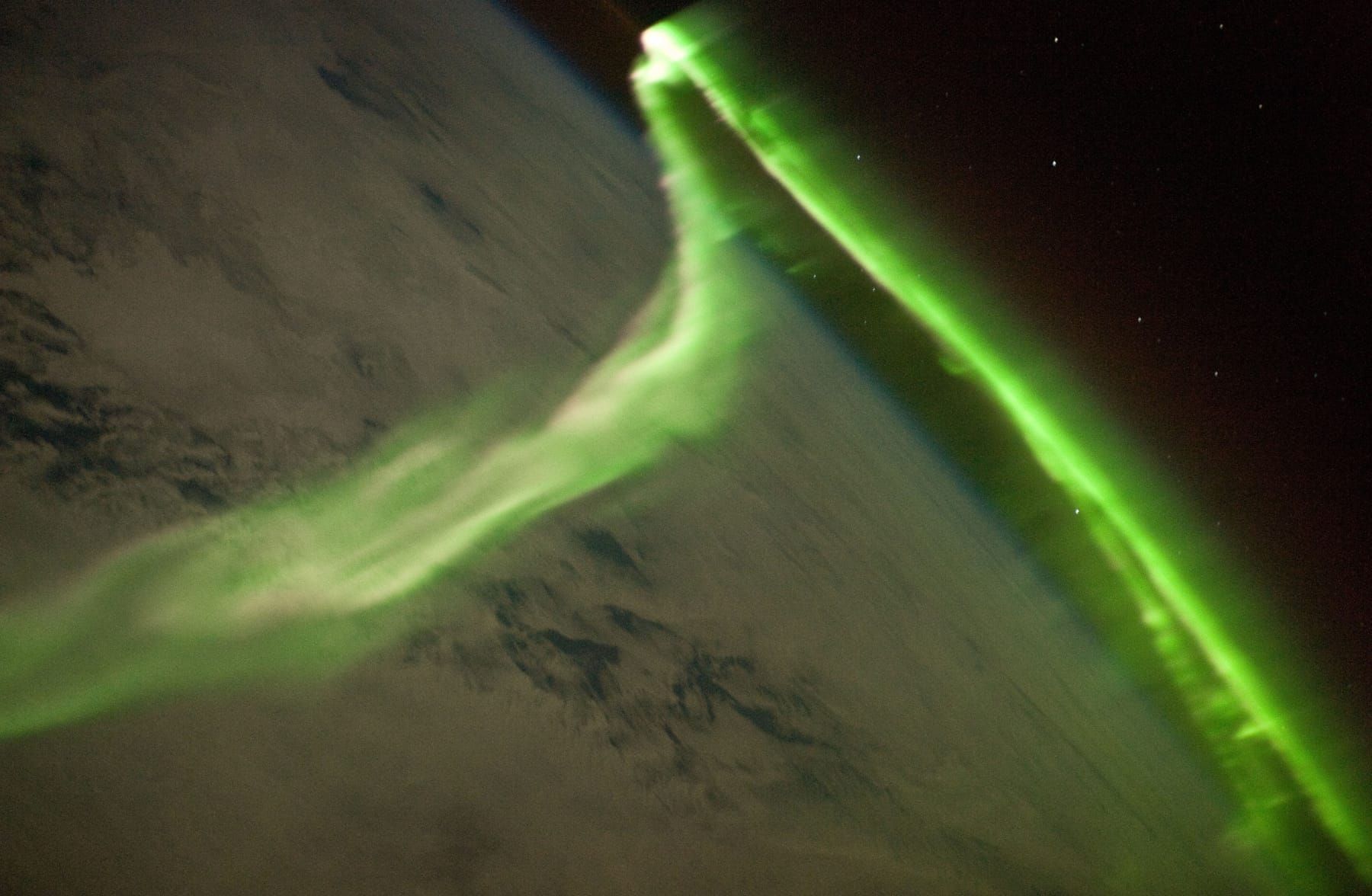
The aurora, the northern lights (aurora borealis) and southern lights (aurora australis), is light from the upper atmosphere. It appears mostly around the magnetic poles, but during geomagnetic storms it can be seen much farther away.
What causes it
NOAA’s Space Weather Prediction Center (SWPC) explains that the aurora is caused by electrons colliding with oxygen and nitrogen in the upper atmosphere. The electrons are accelerated in Earth’s magnetosphere and guided by the magnetic field towards the polar regions. The collisions excite the atoms and molecules, which then release the energy as light. The aurora usually forms 80 to 500 km above the ground, in two ovals roughly centred on the magnetic poles.
The Kp index
The Kp index measures disturbances of Earth’s magnetic field over three-hour intervals, on a scale from 0 to 9. It is the standardised average of measurements from 13 geomagnetic observatories at middle latitudes. Values of 5 or more mean a geomagnetic storm, which is also where NOAA’s G scale starts (Kp 5 = G1, minor, up to Kp 9 = G5, extreme).
What the levels mean for the aurora, according to SWPC:
| Kp | Aurora |
|---|---|
| 0 to 2 | far towards the poles, dim and quiet |
| 3 to 5 | farther from the poles, brighter, more movement |
| 6 to 7 | even farther from the poles, bright and active |
| 8 to 9 | far towards the equator, very bright and active |
As an approximate rule, the equatorward edge of the auroral oval is near 66° geomagnetic latitude at Kp 0 and moves about 2° towards the equator for each Kp step, to about 48° at Kp 9. Geomagnetic latitude is not the same as geographic latitude, and the relationship is only an average. In addition, a bright aurora can often be seen hundreds of kilometres away from where it is overhead, low on the horizon.
Best conditions
- Darkness: go out at night and away from city lights. A full Moon reduces how bright the aurora looks.
- Clear sky: clouds hide it completely.
- A view to the pole: find a spot with an open horizon to the north (to the south in the southern hemisphere), for example a hilltop.
- Around midnight: the best displays are usually within an hour or two of midnight local time.
- Around the equinoxes: SWPC notes a tendency for larger storms near the spring and autumn equinoxes.
- Not in the polar summer: at high latitudes it does not get dark in summer, so the aurora cannot be seen even if it is there (see twilight).
Forecasts on Astrotempo
The tonight page shows two forecasts from NOAA SWPC for your location: the highest predicted Kp during your night, and the chance of aurora at your coordinates from the OVATION model’s 30-minute forecast. Forecasts are predictions, so treat them as a guide.
Sources
- NOAA SWPC: Aurora (cause, height, auroral ovals)
- NOAA SWPC: Tips on viewing the aurora (Kp levels, latitude rule, timing, seasons)
- NOAA SWPC: Planetary K-index and NOAA space weather scales
- NOAA SWPC: Aurora 30-minute forecast
Frequently asked questions
What Kp do I need to see the aurora?
It depends on your geomagnetic latitude. NOAA gives an approximate rule: the equatorward edge of the auroral oval is near 66° geomagnetic latitude at Kp 0 and moves about 2° towards the equator per Kp step, reaching about 48° at Kp 9. Aurora can often be seen hundreds of kilometres away from where it is overhead.
What is the best time of night for aurora?
According to NOAA, usually within an hour or two of midnight, roughly between 10 pm and 2 am local time. During stronger activity the window widens towards evening and morning.