How to watch a meteor shower
No equipment needed: a dark sky, patience and the right hours after midnight.
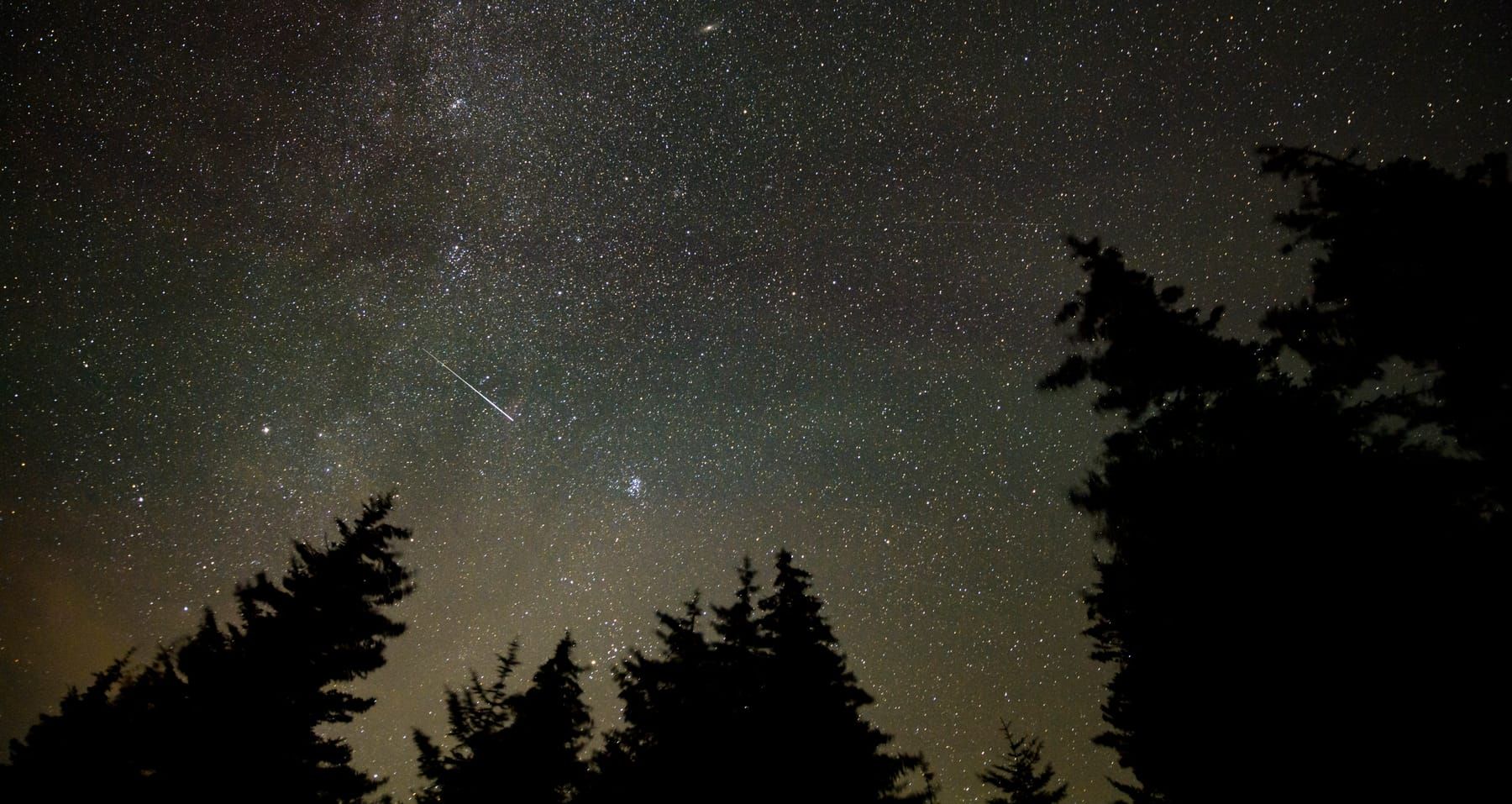
A meteor shower happens when Earth passes through a stream of small particles left behind by a comet (or, in some cases, an asteroid). The particles hit the atmosphere at high speed and leave the streaks of light we call shooting stars. Because Earth crosses these streams at about the same point in its orbit each year, showers return around the same dates.
When to watch
- Near the peak: the meteor shower calendar gives each shower’s peak date and its activity window. The peak is a forecast, not an appointment: the strongest activity can come a little earlier or later, and the nights around it are still worthwhile.
- After midnight: according to the American Meteor Society, most showers are best between midnight and dawn, because many radiants are higher in the sky then.
- When the radiant is up: if the radiant stays below your horizon, you will not see the shower’s normal activity. Some showers favour the northern hemisphere, others the southern.
- Without the Moon: bright moonlight washes out faint meteors. A peak near new Moon is best, but even with a bright Moon, check when it rises and sets: there may be a dark window. The tonight page shows both.
Where to look
You do not need to look at the radiant. Look at a dark, clear part of the sky, roughly halfway between the horizon and the point overhead, away from lights and from the Moon. Meteors near the radiant have short trails, while those farther away can draw long paths across the sky.
The radiant
The radiant is the point in the sky from which a shower’s meteors seem to come. The particles actually travel on nearly parallel paths. Perspective makes them appear to spread out from one point, like railway tracks meeting in the distance. Showers are named after the constellation containing their radiant: the Perseids appear to come from Perseus, the Geminids from Gemini.
ZHR: why you see fewer
The ZHR (Zenithal Hourly Rate) is a standardised measure of a shower’s activity: how many meteors one observer would see per hour under an ideal, very dark sky with the radiant directly overhead. It is not what most people see. A low radiant, moonlight, light pollution and clouds all lower your actual count, and activity is uneven: quiet minutes can be followed by several meteors close together.
Practical tips
- Get dark-adapted: give your eyes at least 20 to 30 minutes and avoid phone screens and bright lights. If you need light, use a dim red one.
- Lie back: a reclining chair or sleeping mat lets you watch a large part of the sky without straining your neck.
- Dress warmly: you will be sitting still for a long time, even on summer nights.
- No equipment: binoculars and telescopes narrow your view too much.
- Allow time: plan for at least an hour.
Sources
- American Meteor Society: Meteor FAQ (best times, where to look, ZHR, dark adaptation, Moon)
- Shower data: IAU Meteor Data Center list of established showers. Peak dates are computed from the solar longitude of each peak. See methodology.
Frequently asked questions
What is the best time to watch a meteor shower?
For most showers, between midnight and dawn on the nights around the peak, when the radiant is higher in the sky. It also helps if the Moon is below the horizon.
Do I need binoculars or a telescope?
No. Meteors appear anywhere in the sky, and binoculars or telescopes show only a tiny part of it. Meteor showers are best watched with the naked eye.
What does ZHR mean?
Zenithal Hourly Rate: the number of meteors an observer would see in an hour under a perfectly dark sky with the radiant overhead. The number you actually see is usually lower.