How to watch a solar eclipse safely
Never look at the Sun without a proper solar filter, except during totality. Here is how to watch safely.
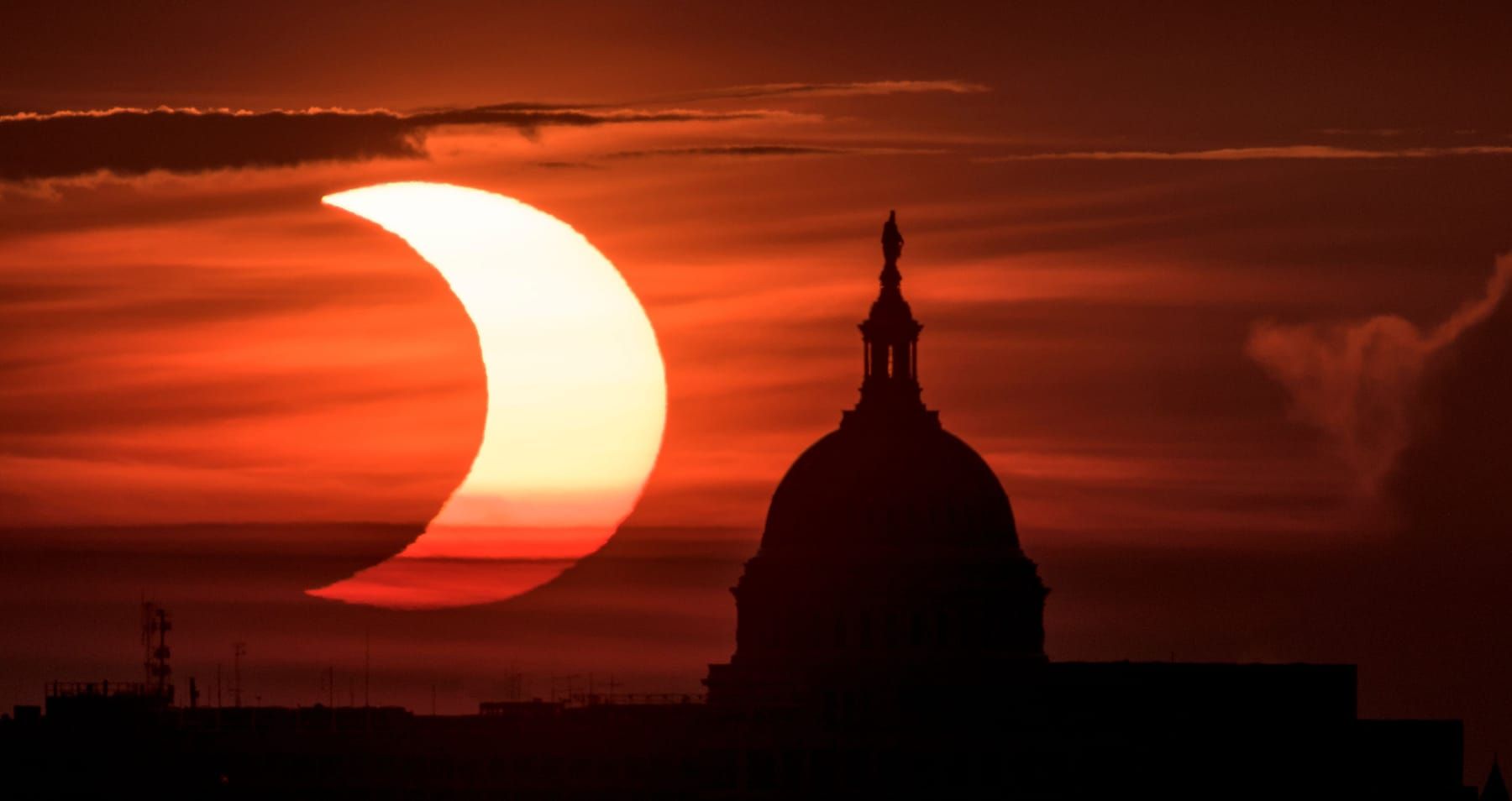
This guide summarises the safety advice of NASA and the American Astronomical Society (AAS). It is not medical advice. If you have questions about your eyes, ask an eye-care professional.
Eclipse glasses and solar viewers
The only safe way to look directly at the uneclipsed, partially eclipsed or annularly eclipsed Sun is through a special-purpose solar filter, such as eclipse glasses or a handheld solar viewer, that conforms to the international standard ISO 12312-2.
- Ordinary sunglasses are not safe, however dark: they let through far more sunlight than is safe.
- Inspect the filter before use. If it is scratched, punctured, torn or coming loose, throw it away.
- Supervise children.
- If you wear glasses, keep them on and put the eclipse glasses over them.
- Cover your eyes with the viewer before looking up at the Sun, and turn away before removing it.
- According to the AAS, viewers that meet ISO 12312-2, are less than 10 years old and undamaged can be reused, and older warnings to look for no more than 3 minutes no longer apply to them.
Binoculars, telescopes and cameras
Never look at the Sun through binoculars, a telescope or a camera while wearing eclipse glasses: the concentrated light burns through the filter. Optics need a dedicated solar filter attached securely to the front. Get advice from an experienced astronomer before trying this.
Totality: the one exception
During a total solar eclipse, inside the narrow path of totality, there is a short moment when the Moon covers the Sun’s bright face completely. Only then may you remove your filter and look with your eyes. As soon as the bright Sun begins to reappear, put the filter back on.
Outside the path of totality, and during every partial and annular (“ring of fire”) eclipse, there is no moment when it is safe to look without a filter.
Watching without glasses: pinhole projection
You can watch indirectly by projecting the Sun’s image:
- Pinhole card: punch a small hole in a card and, with the Sun behind you, let the light fall onto a surface. You will see a small image of the Sun, crescent-shaped during the partial phases.
- Kitchen colander, straw hat or leafy tree: the many small holes project many small crescent Suns onto the ground.
- Crossed fingers: cross the slightly open fingers of both hands to make a waffle pattern and look at the shadow.
Never look at the Sun through the pinhole itself.
Welding filters
Only welding filters of shade 12 or higher are safe for viewing the Sun, and the AAS recommends shade 13 or 14. Do not use adjustable or auto-darkening welding helmets.
When is the next eclipse?
The events calendar lists coming solar eclipses with their type from NASA’s eclipse tables. Whether you see one, and how much of the Sun is covered, depends strongly on where you are.
Sources
Frequently asked questions
Can I look at a solar eclipse with sunglasses?
No. Ordinary sunglasses, even very dark ones, are not safe for looking at the Sun. Use eclipse glasses or a handheld solar viewer that meets the ISO 12312-2 standard.
When can I take my eclipse glasses off?
Only during totality of a total solar eclipse, inside the path of totality, when the Moon completely covers the Sun's bright face. Put them back on as soon as the Sun starts to reappear. During partial and annular eclipses there is no safe moment without a filter.
Can I use eclipse glasses with binoculars or a telescope?
No. The concentrated sunlight would burn through the glasses. Optics need their own solar filter fitted securely to the front. Ask an experienced astronomer before using one.