Lunar eclipses: what they are and how to watch
Earth's shadow falls on the full Moon. It is safe to watch with your eyes, binoculars or a telescope.
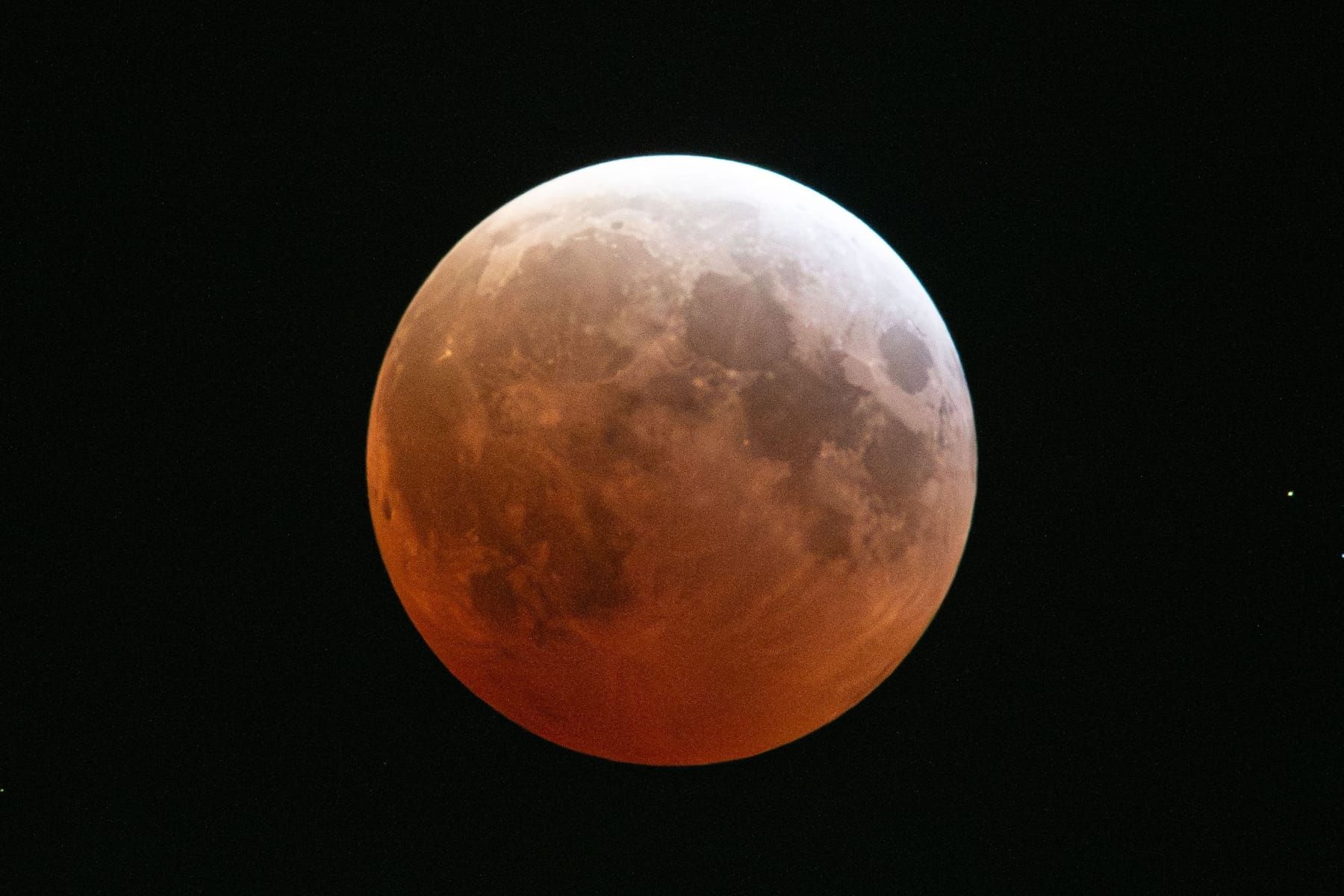
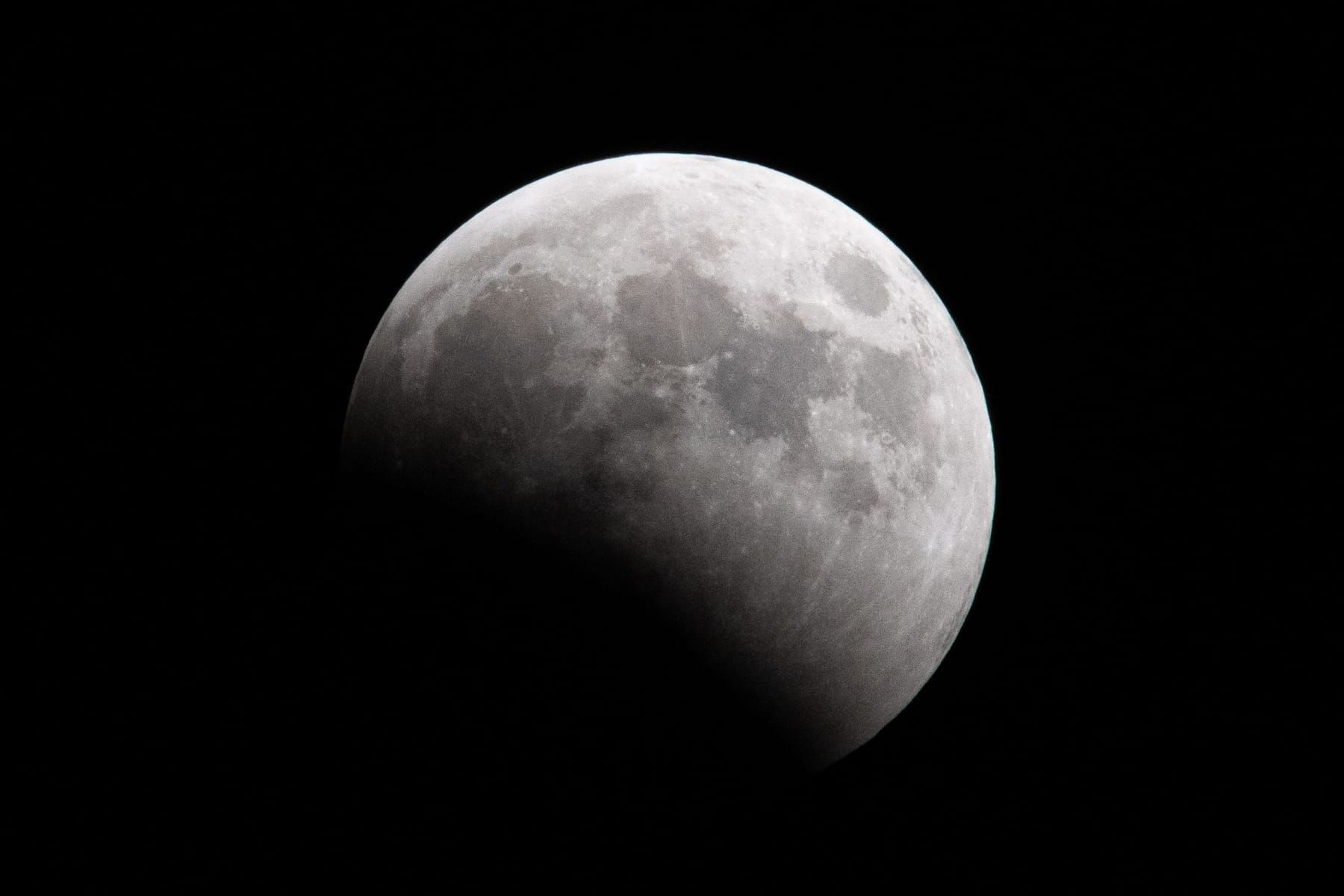
A lunar eclipse happens when Earth is lined up between the Sun and the Moon, so that Earth’s shadow falls on the Moon. This can only happen at full Moon.
Why not every month?
The Moon’s orbit is tilted by about 5° relative to Earth’s orbit around the Sun. Most months, the full Moon passes just above or below Earth’s shadow. Only when a full Moon happens near the line where the two orbits cross do we get an eclipse. According to NASA, there are four to seven eclipses (solar and lunar together) in a year.
Three types
Earth’s shadow has two parts: the dark inner umbra and the faint outer penumbra.
- Total lunar eclipse: the whole Moon passes through the umbra. It does not disappear: it turns orange to deep red.
- Partial lunar eclipse: only part of the Moon enters the umbra. A dark “bite” grows on the Moon and then shrinks again.
- Penumbral lunar eclipse: the Moon passes only through the penumbra. It dims so slightly that it is easy to miss.
The events calendar lists the coming eclipses with their type, taken from NASA’s eclipse tables, and the times for your location.
Why the Moon turns red
Even inside the umbra, some sunlight reaches the Moon: it is bent through Earth’s atmosphere. On the way, blue light is scattered away, as it is in a sunset, and mostly red and orange light gets through. NASA describes it as all of the world’s sunrises and sunsets projected onto the Moon. The more dust and clouds in Earth’s atmosphere at the time, the darker and redder the Moon looks. That is the origin of the popular name “blood Moon”.
Who can see it
A lunar eclipse is visible from everywhere on Earth where the Moon is above the horizon at the time, which is about half of the planet. You do not need to travel, unlike for a total solar eclipse. Whether you see all of it depends on whether the Moon is up during the whole eclipse at your place: it may rise or set during the eclipse.
How to watch
- No protection needed: unlike a solar eclipse, it is safe to look at a lunar eclipse with your eyes, binoculars or a telescope, at every stage.
- Binoculars help: they show the colours of the eclipsed Moon well.
- Photos: NASA suggests a camera on a tripod with exposures of several seconds during totality.
- Take your time: a total lunar eclipse unfolds over a few hours, with totality in the middle.
Sources
- NASA: The Moon and eclipses (types, tilt of the orbit, red colour, visibility)
- NASA: Eclipses (lunar eclipses are safe to view)
- NASA: March 2026 total lunar eclipse, your questions answered (stages, photography)
- Eclipse dates and types: NASA eclipse tables (Espenak and Meeus). See methodology.
Frequently asked questions
Is it safe to look at a lunar eclipse?
Yes. NASA notes that it is safe to look at the Moon with unprotected eyes or through a telescope during all types and all stages of a lunar eclipse.
Why is there not a lunar eclipse every full Moon?
The Moon's orbit is tilted by about 5° to Earth's orbit around the Sun. At most full Moons the Moon passes above or below Earth's shadow.
Where can a lunar eclipse be seen?
From everywhere on Earth where the Moon is above the horizon at the time, which is about half of the planet.