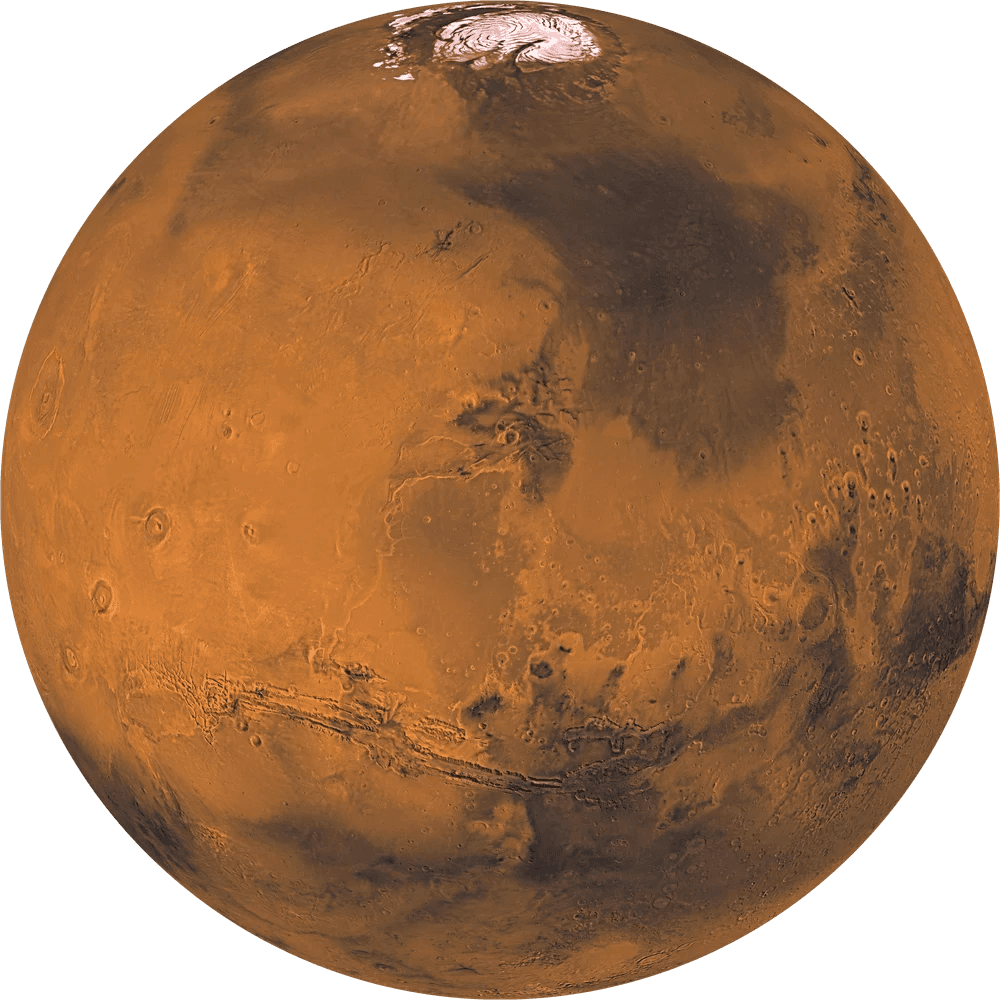
Where is Mars tonight?
Mars is the fourth planet from the Sun, a cold desert world about half as wide as Earth. Iron oxide dust gives it its red colour, and about every 26 months it comes close to Earth and shines brightest around opposition.
Right now
| Direction | WSW (252°) |
|---|---|
| Height above horizon | 48.0° |
| Distance from Earth | 146.4 million mi |
| Distance from the Sun | 146.3 million mi |
| Apparent size | 5.9″ |
| Illuminated | 90% |
| Brightness (magnitude) | 1.0 |
| Constellation | Cancer |
See it on the sky
Loading 3D view...
Drag to look around, pinch or scroll to zoom.
Mars in 3D
Mars lit by the Sun at this moment and seen from Earth’s direction, so its phase matches what a telescope shows. Drag to turn it. The time slider moves the light and the rotation.
Loading 3D view...
Drag to look around, pinch or scroll to zoom.
Where to find Mars among the stars
Two finder charts for today: a wide field to find the right part of the sky and a closer field with fainter stars. North is up and east on the left, as the sky looks to the naked eye. The dotted line marks its path over the coming weeks, one dot per week.
Stars: HYG Database. Constellation figures: Stellarium. Deep-sky objects: OpenNGC (Messier objects marked M).
Visibility over the next 12 months
Angle between Mars and the Sun on the 15th of each month. The further from the Sun, the darker the sky around it. Colour shows whether it is in the evening or the morning sky.
Evening sky Morning sky
Ephemeris for the next 15 days
Position at 0:00 UTC each day as seen from the centre of the Earth (apparent coordinates of date), calculated with Astronomy Engine.
| Date (UTC) | Right ascension | Declination | Magnitude | Apparent size | Distance | From the Sun | Constellation |
|---|---|---|---|---|---|---|---|
| Oct 13, 2026 | 08h 45m 11s | +19° 18′ 51″ | 1.05 | 5.9″ | 1.5801 au | 71.2° | Cancer |
| Oct 14, 2026 | 08h 47m 28s | +19° 11′ 08″ | 1.04 | 6.0″ | 1.5727 au | 71.6° | Cancer |
| Oct 15, 2026 | 08h 49m 45s | +19° 03′ 21″ | 1.03 | 6.0″ | 1.5653 au | 72.0° | Cancer |
| Oct 16, 2026 | 08h 52m 00s | +18° 55′ 31″ | 1.02 | 6.0″ | 1.5578 au | 72.5° | Cancer |
| Oct 17, 2026 | 08h 54m 15s | +18° 47′ 39″ | 1.02 | 6.0″ | 1.5503 au | 72.9° | Cancer |
| Oct 18, 2026 | 08h 56m 29s | +18° 39′ 43″ | 1.01 | 6.1″ | 1.5427 au | 73.4° | Cancer |
| Oct 19, 2026 | 08h 58m 42s | +18° 31′ 46″ | 1.00 | 6.1″ | 1.5351 au | 73.8° | Cancer |
| Oct 20, 2026 | 09h 00m 55s | +18° 23′ 46″ | 0.99 | 6.1″ | 1.5274 au | 74.3° | Cancer |
| Oct 21, 2026 | 09h 03m 06s | +18° 15′ 44″ | 0.98 | 6.2″ | 1.5197 au | 74.7° | Cancer |
| Oct 22, 2026 | 09h 05m 17s | +18° 07′ 40″ | 0.97 | 6.2″ | 1.5120 au | 75.2° | Cancer |
| Oct 23, 2026 | 09h 07m 27s | +17° 59′ 34″ | 0.97 | 6.2″ | 1.5042 au | 75.6° | Cancer |
| Oct 24, 2026 | 09h 09m 36s | +17° 51′ 27″ | 0.96 | 6.3″ | 1.4964 au | 76.1° | Cancer |
| Oct 25, 2026 | 09h 11m 44s | +17° 43′ 18″ | 0.95 | 6.3″ | 1.4886 au | 76.6° | Cancer |
| Oct 26, 2026 | 09h 13m 52s | +17° 35′ 08″ | 0.94 | 6.3″ | 1.4807 au | 77.0° | Cancer |
| Oct 27, 2026 | 09h 15m 58s | +17° 26′ 57″ | 0.93 | 6.4″ | 1.4728 au | 77.5° | Cancer |
Distance from Earth
Distance from Earth over the past and the coming year. The closest approach in this period: February 20, 2027, 101.4 million km.
Million kilometres, sampled every three days.
Brightness
Visual magnitude over the same two years. Higher on the chart is brighter.
Coming up
- Moon near Mars
- Conjunction of Mars and Jupiter
- Conjunction of Mars and Regulus
- Moon near Mars
- Mars at opposition
- Moon near Mars
- Moon near Mars
- Moon near Mars
Facts
| Diameter | 6,792 km |
|---|---|
| Equatorial radius | 3,396 km |
| Polar radius | 3,376 km |
| Mass | 0.642 × 10²⁴ kg |
| Density | 3,934 kg/m³ |
| Surface gravity | 3.7 m/s² |
| Escape velocity | 5 km/s |
| Length of a day | 24.7 hours |
| Rotation period | 24.6 hours |
| Orbital period | 687 days |
| Closest to the Sun | 206.7 million km |
| Farthest from the Sun | 249.3 million km |
| Orbital speed | 24.1 km/s |
| Orbital inclination | 1.8° |
| Orbital eccentricity | 0.094 |
| Axial tilt | 25.2° |
| Mean temperature | -65 °C |
| Surface pressure | 0.010 bar |
| Geometric albedo | 0.170 |
| Known moons | 2 |
| Rings | No |
| Global magnetic field | No |
Moon count: NASA, page updated November 5, 2024
Source: NASA planetary fact sheet (Oct 12, 2026). Calculated with Astronomy Engine, an open-source library verified against the US Naval Observatory and NASA JPL. Data sources
Gravity compared: Mars and Earth
Drop, jump and throw side by side: Mars on one side, Earth or any other world on the other. Pick a world to compare, or open the full tool. Open the gravity tool
Earth: gravity of 9.8 m/s², 2.65 times that of Mars.
Loading 3D view...
| Mars | Earth | |
|---|---|---|
| Surface gravity | 3.7 m/s² | 9.8 m/s² (2.65 ×) |
| Time to fall | 2.32 s | 1.43 s |
Earth: with a mass of 70 kg you would weigh what 70.0 kg weighs on Earth, a force of 686 newtons.
Gravity values are NASA’s, measured at the equator and including the effect of the world’s rotation. The motion is shown without air: on Earth a real ball would be slowed down a little, and in the much denser air of Venus a lot.
Latest NASA images of Mars
The newest images about it in NASA’s Photojournal, updated daily. Open one for NASA’s full caption and the original file.
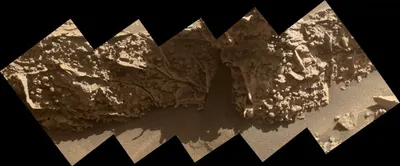
Curiosity Studies Nodules on Boxwork Formations · Feb 23, 2026 · PIA26697 · Photo: NASA/JPL-Caltech/MSSS 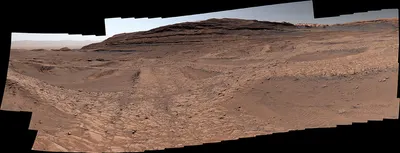
Curiosity Surveys the Boxwork Region · Feb 23, 2026 · PIA26693 · Photo: NASA/JPL-Caltech/MSSS 
Mars Global Localization Pinpoints Perseverance’s Location · Feb 18, 2026 · PIA26705 · Photo: NASA/JPL-Caltech 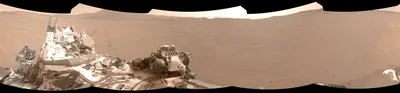
Perseverance Pinpoints Its Location at ‘Mala Mala’ · Feb 18, 2026 · PIA26704 · Photo: NASA/JPL-Caltech 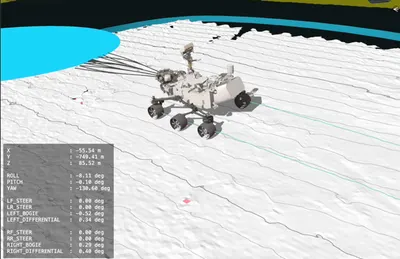
Visualizing Perseverance’s SI-Planned Drive on Mars · Jan 30, 2026 · PIA26646 · Photo: NASA/JPL-Caltech 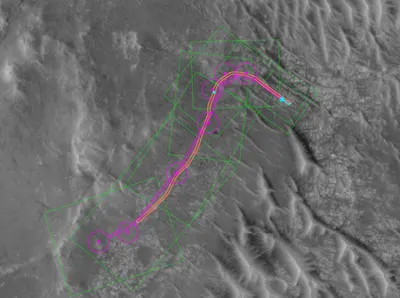
Mapping Perseverance’s Route With SI · Jan 30, 2026 · PIA26645 · Photo: NASA/JPL-Caltech/UofA
NASA news about Mars
- NASA Briefing to Highlight Contributions to Martian Moons Mission
- NASA’s Curiosity Rover Catches Stunning Martian Dawn
- NASA Discovery Reveals Complex Water Systems on Early Mars
- NASA’s Integrated Medical Model (IMM)
- NASA Selects Blue Origin as Mars Telecommunications Network Provider
- NASA’s Perseverance Rover Watches Earth Vanish Behind Martian Moon
Headlines from NASA’s news feeds (in English), updated daily. Last checked October 13, 2026.
Discoveries and exploration
Key moments in the study of Mars, each linked to its source.
- August 1877Asaph Hall discovers Mars's two moons, Phobos and Deimos. Source
- July 15, 1965Mariner 4 makes the first flyby of Mars and returns the first close-up photos of another planet. Source · Recent NASA photos
- November 14, 1971Mariner 9 enters Mars orbit, the first spacecraft to orbit another planet. Source
- 1971The Soviet Mars 3 lander makes a survivable landing, but contact is lost seconds after touchdown. Source
- July 20, 1976NASA's Viking 1 lander touches down on Mars; it operated until November 1982. Source
- July 4, 1997Mars Pathfinder lands in Ares Vallis, delivering the Sojourner rover. Source
- January 3, 2004Rover Spirit lands, followed by Opportunity on Jan. 24, to look for signs of past water. Source
- May 25, 2008Phoenix lands in the Martian arctic and goes on to verify water ice beneath the surface. Source
- August 6, 2012NASA's Curiosity rover lands to determine whether Mars was ever able to support microbial life. Source
- February 18, 2021NASA's Perseverance rover lands in Jezero Crater to seek signs of ancient life and collect samples. Source
- April 19, 2021The Ingenuity helicopter makes the first powered, controlled flight on Mars. Source
- September 10, 2025NASA reports that Perseverance's Sapphire Canyon rock sample contains potential biosignatures. Source
Checked against the linked NASA, ESA and NOAA pages on October 10, 2026.
How to use this page
Choose your place and a night at the top: tonight by default, or one of the dates under it. The tiles show when Mars rises, is highest and sets, and the numbers that matter for that night. Below them you find where it is right now, the sky in 3D with Mars marked, finder charts, the year ahead and the facts.
What the numbers mean
- Rises and sets
- When the top edge of the disc meets a flat horizon, with the bending of light by the air included, as in almanacs. A time on another day carries its date.
- Highest
- When it crosses the meridian, due south or due north, and its height above the horizon then.
- Direction and height
- The compass point and azimuth to face, counted from north through east, and the angle above the horizon. A fist at arm’s length covers about 10°.
- Distance and apparent size
- How far away it is from Earth’s centre at that moment and how wide it looks in the sky, in arcminutes (′) or arcseconds (″).
- Magnitude
- Brightness: the smaller the number, the brighter. About 6 is the faintest the eye sees under a dark sky.
How accurate it is
Positions and times come from Astronomy Engine. In our tests positions agree with NASA JPL’s Horizons to within one arcminute, and rise and set times of the Sun and the Moon to within two minutes. Times assume a flat horizon at your place, so hills and buildings change when you actually see it rise or set. Methodology
Frequently asked questions
Why do the times change from night to night?
Earth turns once a day, and the body moves along its own path at the same time, so it rises and sets at a slightly different time each day. The Moon moves fastest and rises about 50 minutes later each day.
Why does a time show another date?
The page follows the night that starts on the evening of the chosen date. A rise, highest point or set after midnight belongs to the next date, so it carries that date.
Do the times include hills and buildings?
No. They are for a flat horizon. Hills, trees and buildings make a body rise later and set earlier than the page shows.
How do I find it in the sky?
Use the direction and height at its best time, then the finder charts further down to place it among the stars. The 3D sky shows it from your place at any time of the night.
Related guides
- How to find planets in the night skyFive planets are easy to see with the naked eye. Here is where to look, when, and how to recognise them.
- Opposition, conjunction and elongation explainedThree words from the planet calendar, and what they mean for when you can see each planet.
- Magnitude: how star brightness is measuredLower numbers mean brighter, and five magnitudes are a factor of 100 in brightness.
- Altitude and azimuth: finding things in the skyTwo angles tell you exactly where to look: which direction, and how high.
- Binoculars for stargazing: what to buy and what to look atA pair of 7x50 or 10x50 binoculars shows the craters of the Moon, the moons of Jupiter, dozens of star clusters and the Andromeda Galaxy, for a fraction of the cost of a telescope.