Scale of the universe
The observable universe is about 92 billion light-years across. Zoom out to it from an astronaut through 72 objects, each drawn to scale beside the one before it.
From an astronaut to the observable universe
Astronaut
1.9 m
Bruce McCandless in 1984, the first astronaut to fly free in space without a tether. The size is that of the tallest astronaut NASA’s spacewalk suit is made to fit.
Click or touch the picture, then scroll or drag sideways. The slider and the arrow keys on it work too. Click an object to go to it, and the centred one to open its page.
Every object on the journey
| Object | Size | Source |
|---|---|---|
| AstronautBruce McCandless in 1984, the first astronaut to fly free in space without a tether. The size is that of the tallest astronaut NASA’s spacewalk suit is made to fit. | 1.9 m | NASA Johnson Space Center: Extravehicular Mobility Unit fact sheet (the suit fits astronauts up to 6 ft 2 in tall) |
| Hubble Space TelescopeA space telescope in orbit since 1990, whose pictures appear further along this journey. The size is its length. | 13.2 m | NASA Goddard Scientific Visualization Studio: spacecraft size comparison between the Webb and Hubble space telescopes |
| International Space StationA laboratory where astronauts live and work in orbit, about as long as an American football field including the end zones. | 109 m | NASA: International Space Station facts and figures |
| Saturn VThe rocket that sent the Apollo astronauts to the Moon. The size is its height. The picture is a NASA illustration from 1967. | 111 m | NASA Marshall Space Flight Center: Saturn V and the Statue of Liberty (1967 illustration, 363 feet) |
| BennuA near-Earth asteroid, a loose pile of rubble. NASA’s OSIRIS-REx spacecraft brought a sample of it back to Earth in 2023. The size is its mean diameter. | 490 m | Barnouin et al. (2019), Nature Geoscience 12, 247 (mean diameter 490.06 m, from the OSIRIS-REx shape model) |
| DeimosThe smaller and outer of Mars’s two moons. | 12.4 km | NASA/JPL Solar System Dynamics: planetary satellite physical parameters |
| PhobosThe larger of Mars’s two small moons, a lumpy body of rock that circles Mars three times a day. | 22.2 km | NASA/JPL Solar System Dynamics: planetary satellite physical parameters |
| EnceladusA small icy moon of Saturn that sprays water into space from an ocean under its ice. | 504 km | NASA/JPL Solar System Dynamics: planetary satellite physical parameters |
| VestaThe second-largest body in the asteroid belt, visited by NASA’s Dawn spacecraft in 2011 and 2012. | 523 km | NASA/JPL Small-Body Database |
| CeresThe largest object in the asteroid belt and the only dwarf planet in the inner solar system. | 939 km | NASA/JPL Small-Body Database |
| CharonPluto’s largest moon, about half Pluto’s width. | 1,212 km | NASA/JPL Solar System Dynamics |
| MakemakeA dwarf planet in the Kuiper Belt. No spacecraft has been there, so it is drawn, not photographed. | 1,430 km | NASA Science: Makemake |
| HaumeaA dwarf planet that spins in under four hours, which has stretched it into an elongated, rugby-ball shape. The size is its longest axis. Drawn, not photographed. | 2,322 km | Ortiz et al. (2017), Nature 550, 219–223 (stellar occultation) |
| ErisA dwarf planet far beyond Pluto, almost exactly as wide. Drawn, not photographed. | 2,326 km | Sicardy et al. (2011), Nature 478, 493–496 (stellar occultation) |
| PlutoA dwarf planet of ice and rock in the Kuiper Belt beyond Neptune. | 2,376 km | NASA NSSDCA fact sheets |
| TritonNeptune’s largest moon, which orbits the planet backwards, against the way Neptune spins. | 2,705 km | NASA/JPL Solar System Dynamics |
| EuropaJupiter’s icy moon, with an ocean of salty water under its crust. | 3,122 km | NASA/JPL Solar System Dynamics |
| MoonEarth’s only natural satellite, a little over a quarter of Earth’s width. | 3,475 km | NASA NSSDCA fact sheets |
| IoJupiter’s innermost large moon, the most volcanically active world in the solar system. | 3,643 km | NASA/JPL Solar System Dynamics |
| CallistoJupiter’s second-largest moon, one of the most heavily cratered worlds known. | 4,821 km | NASA/JPL Solar System Dynamics |
| MercuryThe smallest planet and the closest to the Sun. | 4,879 km | NASA NSSDCA fact sheets |
| TitanSaturn’s largest moon, wrapped in a thick orange haze. It is wider than the planet Mercury. | 5,150 km | NASA/JPL Solar System Dynamics |
| GanymedeThe largest moon in the solar system. | 5,262 km | NASA/JPL Solar System Dynamics |
| MarsThe red planet, about half as wide as Earth. | 6,779 km | NASA NSSDCA fact sheets |
| VenusAlmost Earth’s twin in size, under thick clouds. It spins backwards compared with most planets. | 12,104 km | NASA NSSDCA fact sheets |
| EarthOur home, the largest of the four rocky planets. | 12,742 km | NASA NSSDCA fact sheets |
| Kepler-22bThe first planet with a measured size found in the habitable zone of a star other than the Sun. No one has seen it: drawn as a plain ball. | 30,360 km | Borucki et al. (2012), ApJ 745, 120 (radius 2.38 Earth radii) |
| NeptuneThe outermost planet, an ice giant almost four times as wide as Earth. | 49,244 km | NASA NSSDCA fact sheets |
| UranusAn ice giant tipped on its side, so it rolls around the Sun. | 50,724 km | NASA NSSDCA fact sheets |
| SaturnThe ringed gas giant. The size given is the planet’s. Its main rings reach much farther. | 116,464 km | NASA NSSDCA fact sheets |
| JupiterThe largest planet, about eleven times as wide as Earth. | 139,822 km | NASA NSSDCA fact sheets |
| SunOur star. About 109 Earths would fit side by side across its face. | 1.4 million km | NASA NSSDCA fact sheets |
| Sirius AThe brightest star in the night sky, a hot white star 8.6 light-years away. | 2.4 million km | Kervella et al. (2003), A&A 408, 681 (VLTI interferometry) |
| PolluxThe brightest star in Gemini, an orange giant that probably has a planet of its own. | 12.2 million km | Aurière et al. (2009), A&A 504, 231 (radius from the interferometric diameter of Nordgren et al. 2001); temperature from Heiter et al. (2015), A&A 582, A49 |
| ArcturusAn orange giant in Boötes, the brightest star north of the celestial equator. | 35.3 million km | Ramírez and Allende Prieto (2011), ApJ 743, 135 |
| AldebaranThe orange-red eye of Taurus, the Bull, an ageing red giant. | 61.5 million km | Richichi and Roccatagliata (2005), A&A 433, 305 |
| Sagittarius A*The black hole at the centre of our galaxy, about 4 million times the mass of the Sun. The size is that of its event horizon, drawn dashed; the Event Horizon Telescope’s picture of it shows the glowing ring around it, about 2.7 times as wide. | 23.6 million km | Event Horizon Telescope Collaboration (2022), ApJL 930, L12 (mass about 4 million Suns) |
| DenebA white supergiant in Cygnus, one of the most luminous stars you can see without a telescope. Its distance, and so its size, is uncertain. | 282.5 million km | Schiller and Przybilla (2008), A&A 479, 849 |
| Earth’s orbitThe whole path of Earth around the Sun. The Sun is a speck at its centre at this scale. | 299.2 million km | NASA NSSDCA fact sheets |
| AntaresThe red supergiant at the heart of Scorpius. Its name means “rival of Mars”, for its red colour. | 946.2 million km | Ohnaka et al. (2013), A&A 555, A24 (VLTI/AMBER) |
| BetelgeuseThe red supergiant at Orion’s shoulder. In place of the Sun it would reach past the orbit of Mars. | 1.1 billion km | Joyce et al. (2020), ApJ 902, 63 |
| VY Canis MajorisOne of the largest known stars, a red hypergiant shedding its outer layers into space. | 2.0 billion km | Wittkowski et al. (2012), A&A 540, L12 |
| Solar systemThe Sun and the eight planets on their orbits, out to Neptune. The planets are shown where they were when this page was built; at this scale even the Sun is only a speck. | 9.0 billion km | NASA NSSDCA fact sheets |
| HeliosphereThe bubble blown by the solar wind around the solar system. Voyager 1 crossed its edge in 2012, about 122 times as far from the Sun as Earth. Drawn as a sphere of that size. | 36.5 billion km | NASA Science: Voyager, the interstellar mission (Voyager 1 entered interstellar space at about 122 AU) |
| M87*The black hole in the galaxy Messier 87, 6.5 billion times the mass of the Sun: in 2019 the first black hole ever pictured. The size is that of its event horizon, drawn dashed; the Event Horizon Telescope’s picture shows the glowing ring around it, about 2.7 times as wide. | 38.4 billion km | Event Horizon Telescope Collaboration (2019), ApJL 875, L1 (mass 6.5 billion Suns) |
| TON 618The black hole that powers the distant quasar TON 618, about 66 billion times the mass of the Sun. The size is that of its event horizon. No picture of it exists: drawn like the pictured black holes. | 389.8 billion km | Shemmer et al. (2004), ApJ 614, 547 (black hole mass 10^10.82 Suns) |
| Cat’s Eye NebulaThe shells of gas a dying star has thrown off, a planetary nebula. The size is that of Hubble’s picture of its inner part. | 0.5 light-years | NASA Astronomy Picture of the Day: The Cat’s Eye Nebula from Hubble (over half a light-year across) |
| Barnard 68A dark cloud of gas and dust about 500 light-years away, so dense that it hides the stars behind it. | 0.5 light-years | NASA Astronomy Picture of the Day: Barnard 68 (about half a light-year across) |
| Ring NebulaA shell of gas thrown off by a dying star in Lyra, about 2,000 light-years away. | 1 light-year | ESA/Hubble: The Ring Nebula (opo9901a) |
| Oort CloudA vast shell of icy bodies thought to surround the solar system, perhaps out to 100,000 times Earth’s distance from the Sun. No one has seen it, so it is drawn. | 3.2 light-years | NASA Science: Oort Cloud facts (outer edge between 10,000 and 100,000 AU) |
| Pillars of CreationColumns of gas and dust in the Eagle Nebula where new stars are forming. The size given is their height. | 5 light-years | NASA: Hubble studies the Pillars of Creation |
| Crab NebulaThe expanding debris of a star whose explosion was recorded by Chinese astronomers in 1054. | 6 light-years | NASA Hubble Messier Catalog: Messier 1 |
| Kepler’s SupernovaThe remains of a star whose explosion Johannes Kepler watched in 1604. Pictured in X-ray, visible and infrared light. | 14 light-years | ESA/Hubble: Kepler’s Supernova Remnant (opo0429a, about 14 light-years wide) |
| Tycho’s SupernovaThe remains of a star whose explosion Tycho Brahe recorded in 1572. Pictured in X-rays by the Chandra telescope. | 20 light-years | NASA Astronomy Picture of the Day: X-rays from Tycho’s Supernova Remnant (nearly 20 light-years across) |
| Messier 2A globular cluster of more than 150,000 stars, one of the largest of its kind. Drawn as a swarm of stars, not a photograph. | 150 light-years | NASA Hubble Messier Catalog: Messier 2 |
| Segue 2A tiny galaxy that orbits the Milky Way, with the light of only about 900 Suns: in 2013 the least massive galaxy known. The size is that of the sphere that holds half its light. Drawn, not a photograph. | 300 light-years | Kirby et al. (2013), ApJ 770, 16 (half-light radius 46 pc) |
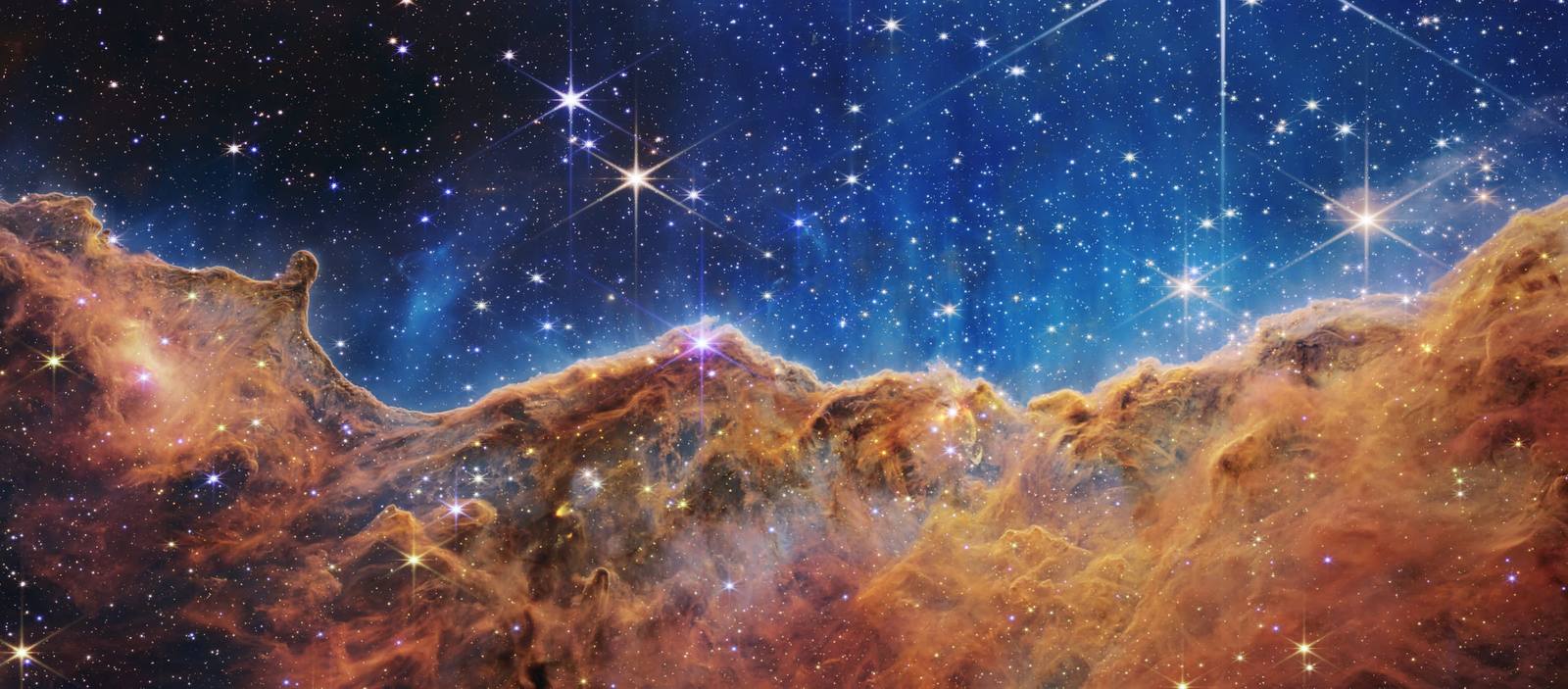
| Tarantula NebulaThe largest and brightest star-forming region in the Local Group, in the Large Magellanic Cloud. The size is the width of the Webb telescope’s picture. | 340 light-years | NASA: A cosmic tarantula, caught by NASA’s Webb (the mosaic is 340 light-years across) |
| Barnard’s GalaxyA small irregular galaxy in the Local Group, 1.6 million light-years away. | 7,000 light-years | NASA/JPL-Caltech: Barnard’s Galaxy from WISE (about 7,000 light-years across) |
| Messier 32A small elliptical galaxy that orbits the Andromeda Galaxy. Drawn as a glow, not a photograph. | 8,000 light-years | SEDS Messier Database: Messier 32 |
| Sombrero GalaxyA galaxy seen almost edge on, with a bright bulge and a dark lane of dust, 28 million light-years away. | 50,000 light-years | NASA Goddard Scientific Visualization Studio: the Sombrero Galaxy from Hubble |
| Fireworks GalaxyA spiral galaxy seen face on, named for the many supernovae seen in it. | 50,000 light-years | NASA Hubble Caldwell catalog: Caldwell 12 (about 50,000 light-years across) |
| Whirlpool GalaxyA spiral galaxy with two great arms, 30 million light-years away. | 60,000 light-years | NASA Hubble: The Whirlpool Galaxy |
| Milky WayOur galaxy, with at least 100 billion stars. No one has photographed it from outside: the picture is NASA’s illustration. | 100,000 light-years | NASA: Beyond Our Solar System poster |
| Hoag’s ObjectA rare ring galaxy: a ring of young blue stars around a yellow core of old ones, 600 million light-years away. | 120,000 light-years | NASA Hubble: Ring of hot blue stars pinwheels around yellow nucleus of Hoag’s Object galaxy (the ring’s outer edge about 120,000 light-years across, 600 million light-years away) |
| Cartwheel GalaxyA ring galaxy, shaped by a collision with a smaller galaxy, about 500 million light-years away. Pictured by the Webb telescope. | 150,000 light-years | NASA Hubble: The Cartwheel Galaxy, a starry ring world born in a head-on collision (the ring is 150,000 light-years across) |
| Andromeda GalaxyThe nearest large galaxy, 2.5 million light-years away, one of the most distant things you can see without a telescope. | 220,000 light-years | NASA Goddard Scientific Visualization Studio: Swift’s view of the Andromeda Galaxy |
| IC 1101The largest galaxy known, a giant elliptical at the centre of the galaxy cluster Abell 2029. Drawn as a glow, not a photograph. | 1.7 million light-years | Marrero-de la Rosa et al. (2026), accepted in Astronomy & Astrophysics (diameter about 520 kpc) |
| Local GroupOur galaxy’s family of more than 30 galaxies. The Milky Way and Andromeda are drawn to scale, 2.5 million light-years apart. | 10 million light-years | NASA Imagine the Universe: The Local Group |
| Virgo SuperclusterThe supercluster around the Virgo Cluster of galaxies, our Local Group included, now known to be part of Laniakea. Drawn, not a map. | 100 million light-years | NASA Imagine the Universe: The Local Supercluster (roughly 100 million light-years across); Tully et al. (2014), Nature 513, 71 (part of Laniakea) |
| Laniakea SuperclusterThe supercluster of galaxies that includes ours. Its galaxies stream towards a region called the Great Attractor, and the Milky Way lies near its edge. Its name is Hawaiian for “immense heaven”. Drawn, not photographed. | 520 million light-years | Tully et al. (2014), Nature 513, 71–73 |
| Huge-LQGThe Huge Large Quasar Group: 73 quasars in the young universe that seem to form one structure. The size is its longest extent; whether it is a single structure is still debated. Drawn, not a map. | 4 billion light-years | Clowes et al. (2013), MNRAS 429, 2910 (longest dimension about 1,240 Mpc) |
| Observable universeEverything whose light has had time to reach us since the Big Bang. The picture is not a view from outside: it is half of NASA’s WMAP map of the oldest light we can see, the cosmic microwave background, redrawn as a disc. | 92 billion light-years | Davis and Lineweaver (2004), PASA 21, 97–109 |
Sizes are diameters, except for the Pillars of Creation (their height). Nebulae, galaxies and larger structures have no sharp edge, so their sizes are round figures. Data sources
Frequently asked questions
How big is the universe?
The observable universe is about 92 billion light-years across. It is the part of the universe whose light has had time to reach us since the Big Bang. The universe as a whole may be much larger, or have no edge at all.
How big is the Milky Way?
Our galaxy’s disc is about 100,000 light-years across, and the Sun is one of its at least 100 billion stars.
What is the largest structure on this journey?
Huge-LQG, about 4 billion light-years across, if it is a single structure, which is still debated. Only the observable universe itself is larger.